
 Canadian
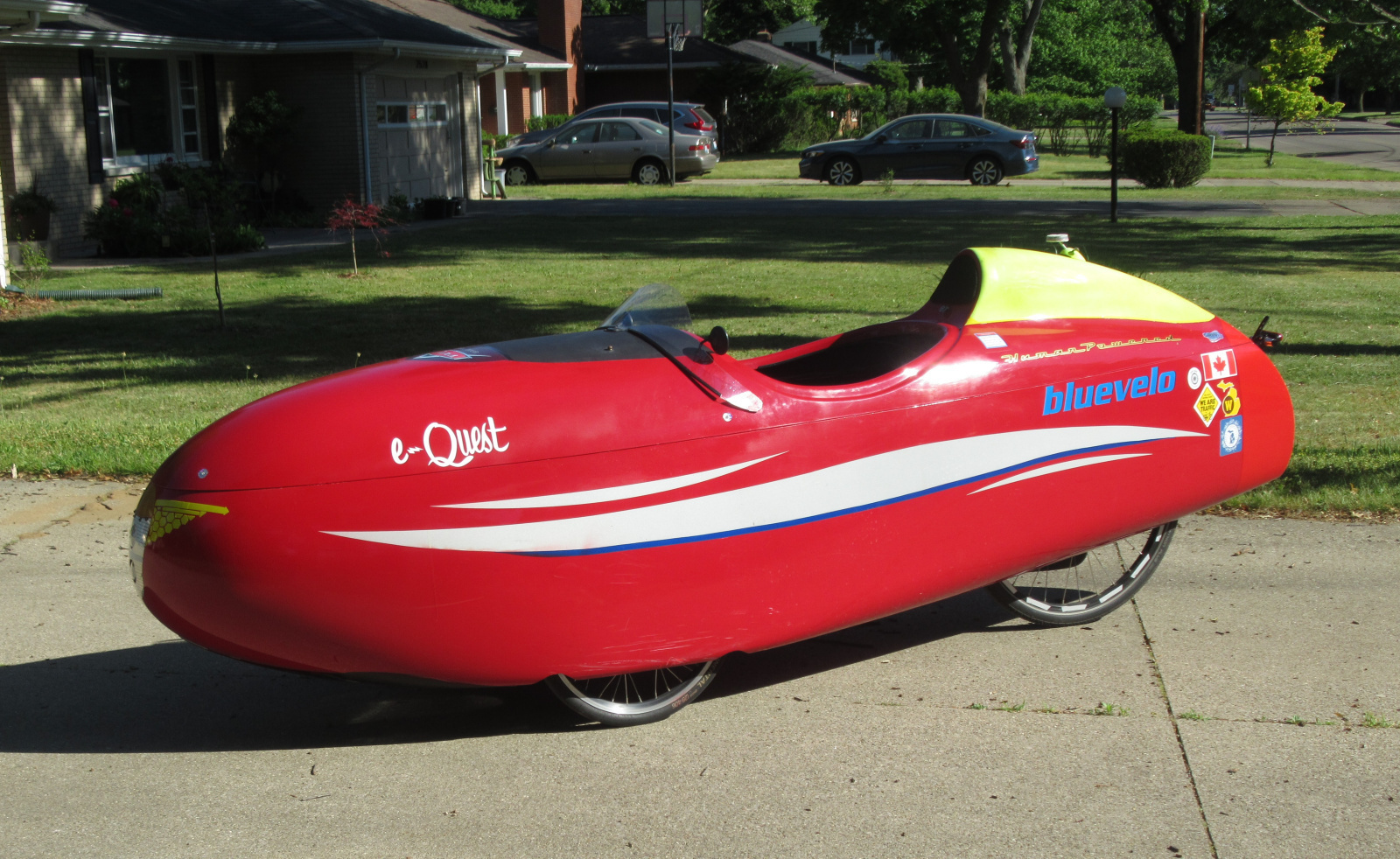
e-Quest
Kalamazoo, Michigan, USA
|
158
Published: 2026-06-07
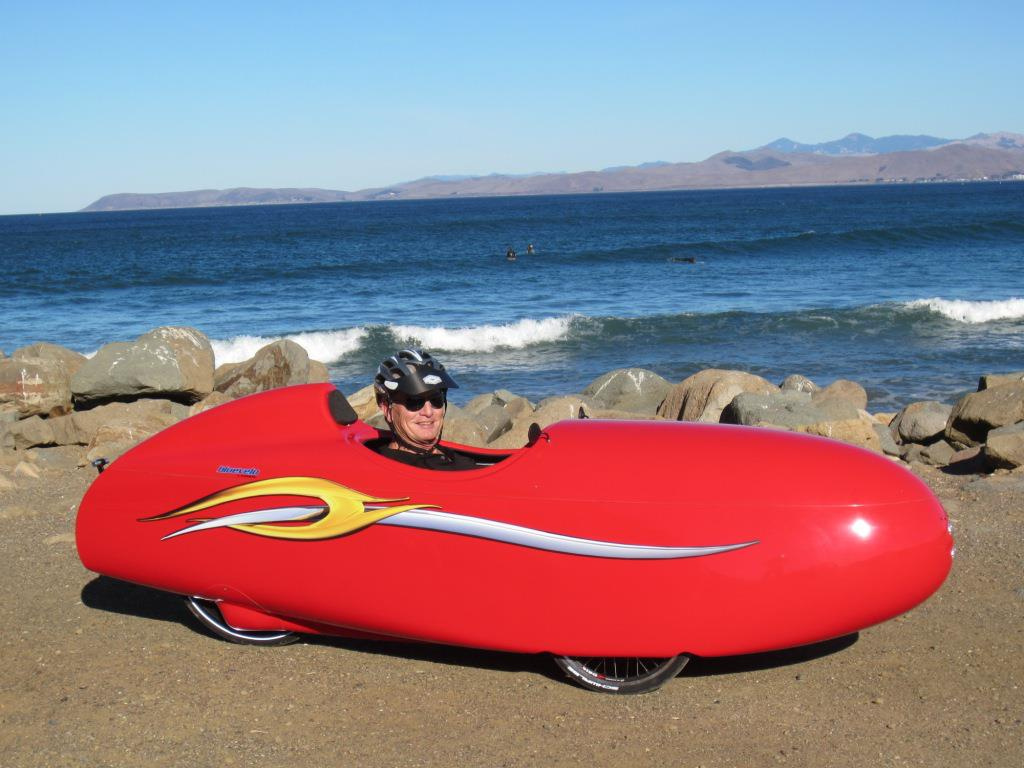
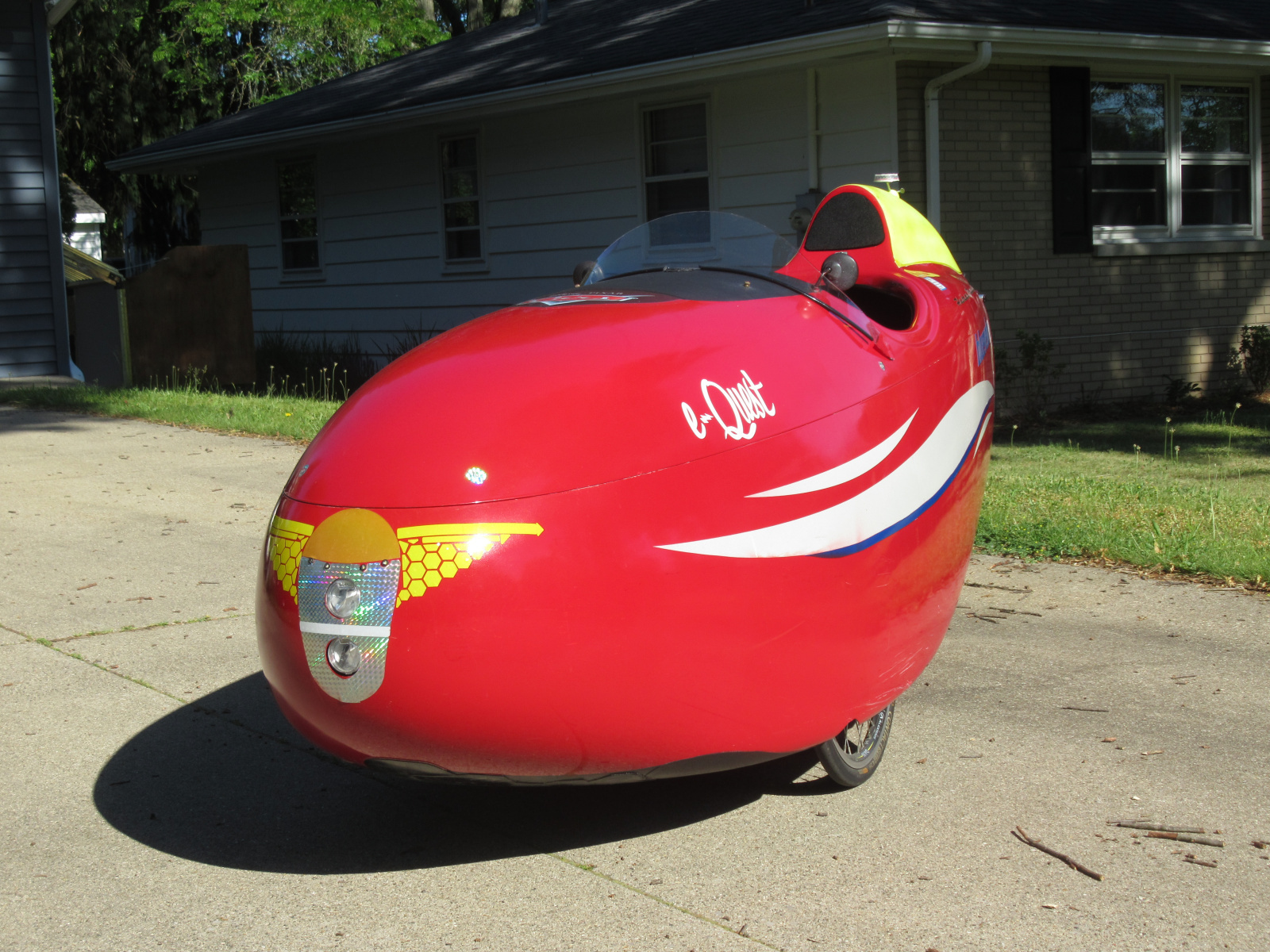
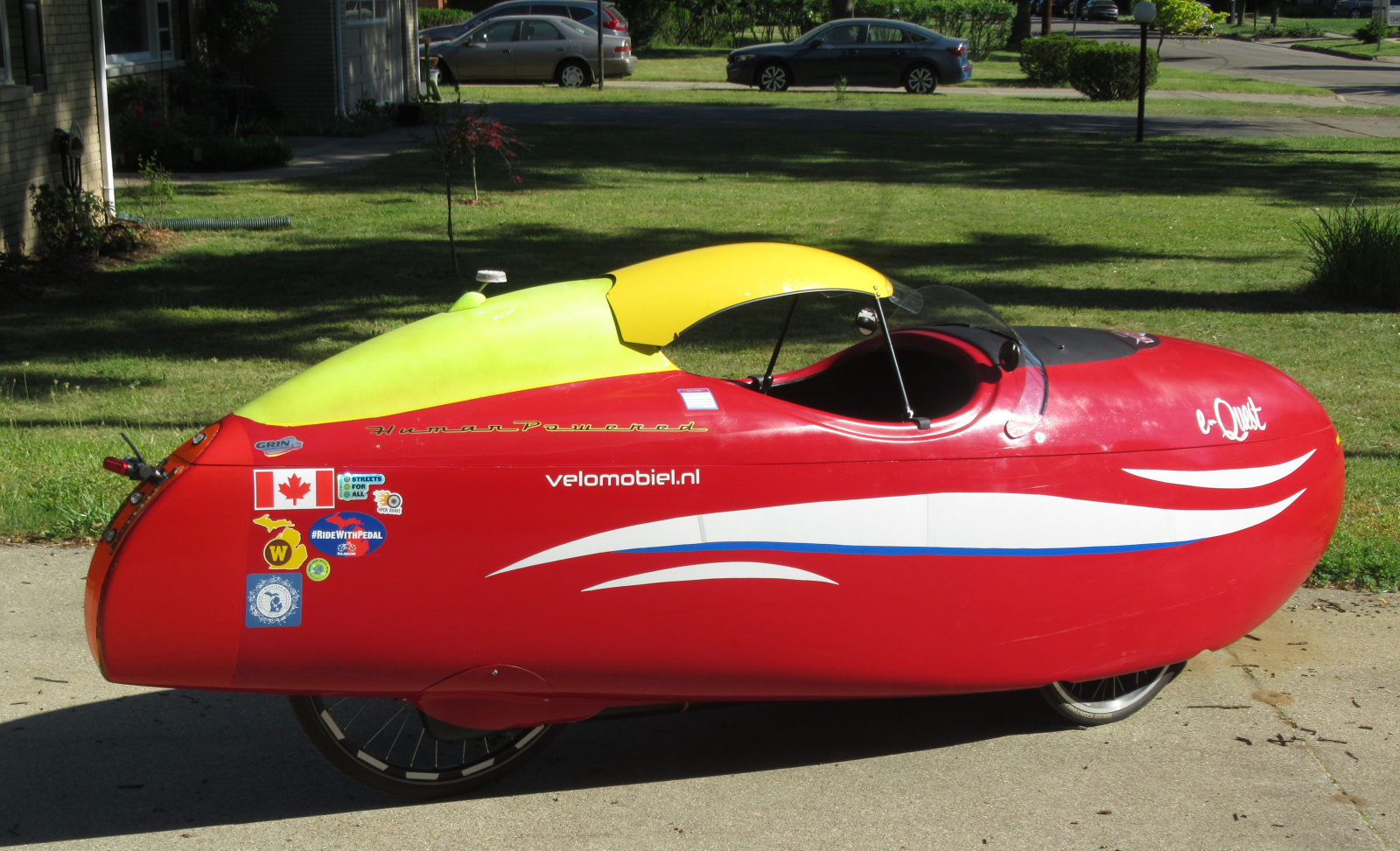
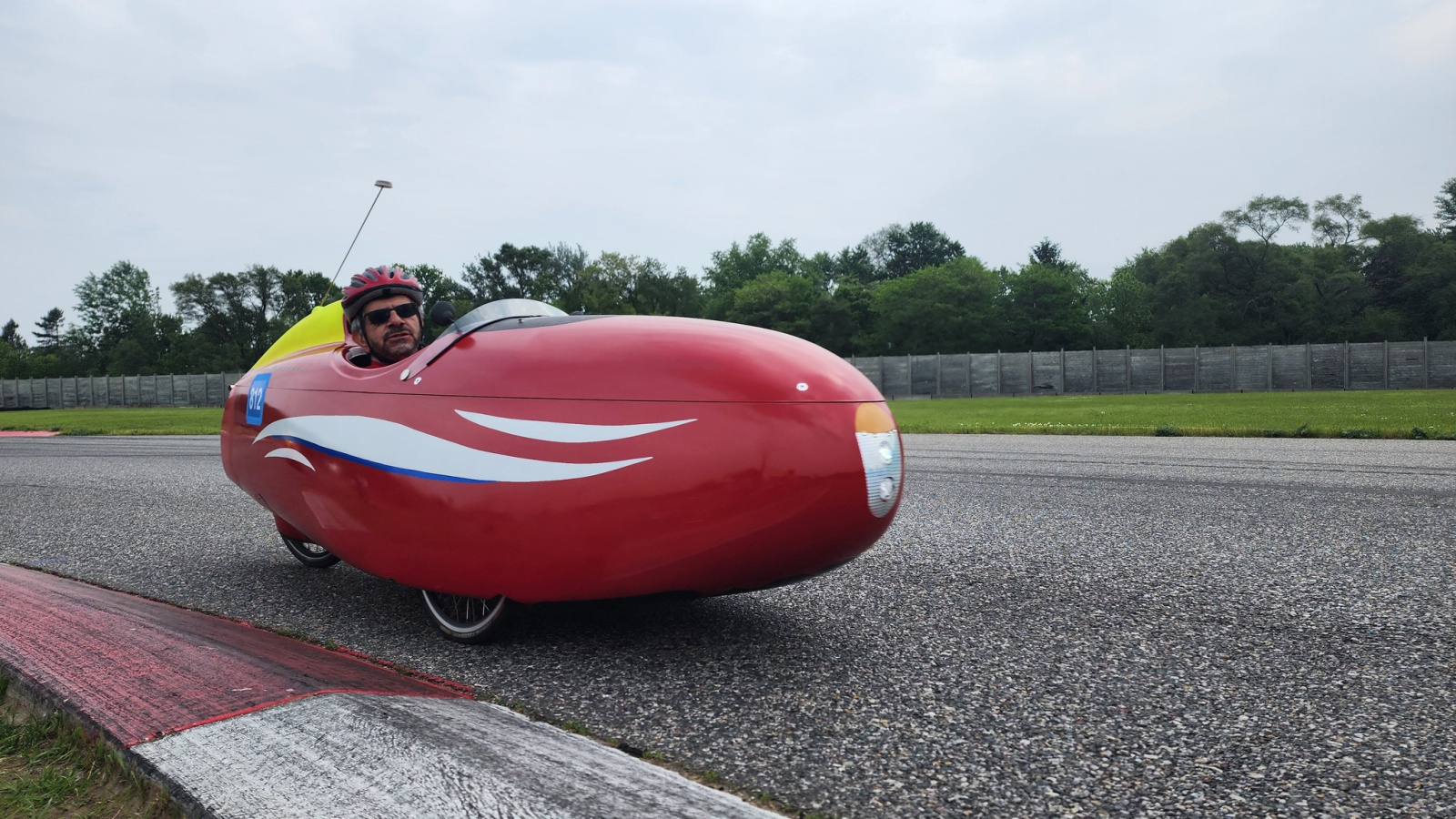
Human-electric hybrid tricycle. I have added pedal assist to a pre-owned carbon-fiber Quest velomobile. The purpose of this project was to create a practical and efficient vehicle for most of my urban commuting and errands, along with the occasional out of town excursion. I wished to exploit the advantages of a fully faired vehicle to safely increase my low-impact travel relative to using my recumbent bicycle. The reduced aerodynamic drag results in significantly less energy required to travel on level ground, especially at speeds exceeding ~14 mph. The 3-wheeled "tadpole" configuration will keep me upright when surfaces get slippery, and the fairing provides additional protection from the weather and certain kinds of crash injuries. The added weight, however, requires the addition of electric pedal assist, mainly to maintain safe minimum speed on uphill sections of roadways shared with automobile traffic.
Additional Info
https://www.youtube.com/watch?v=xc69YVyIbqc
Acquisition and prep
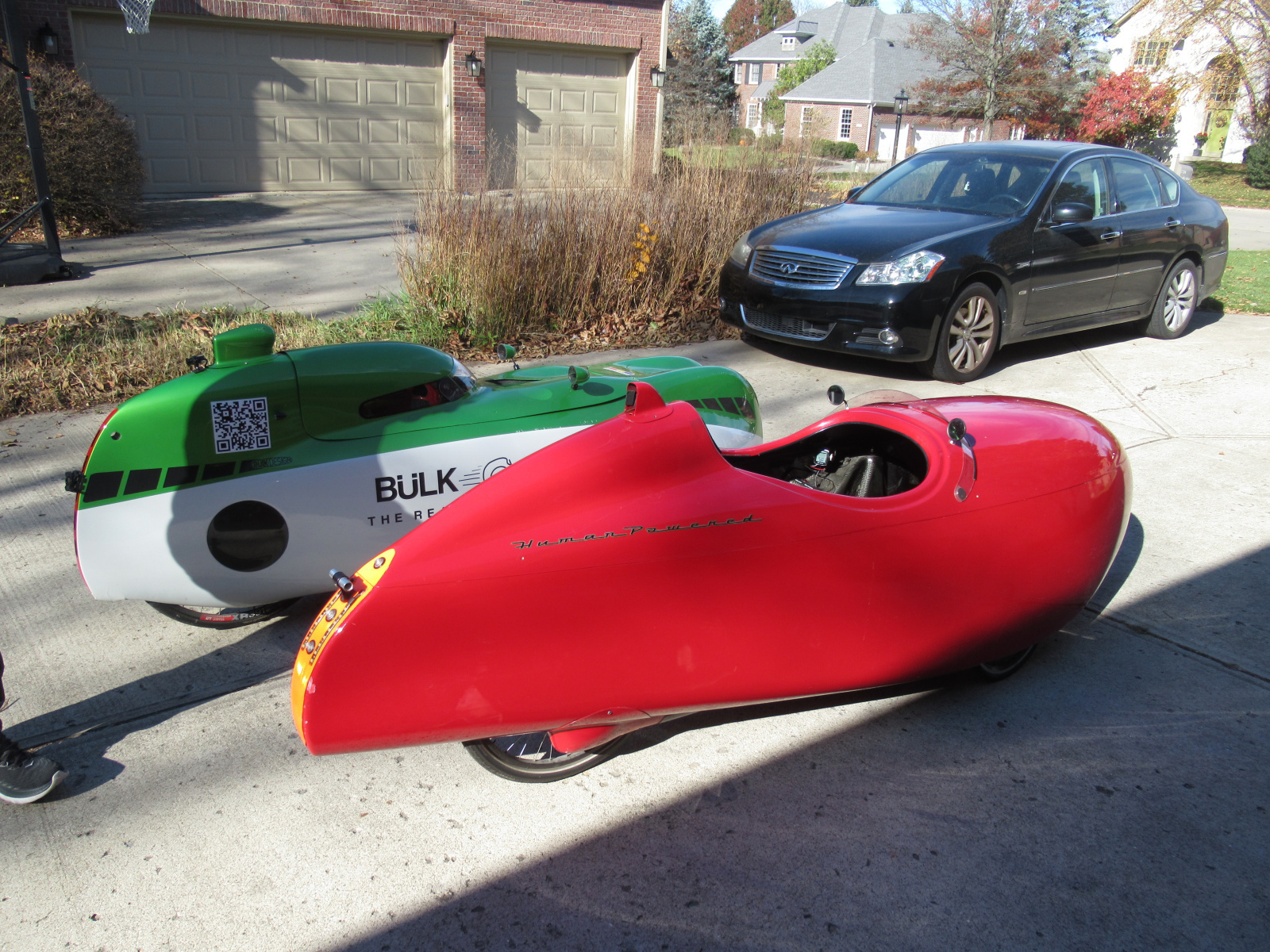
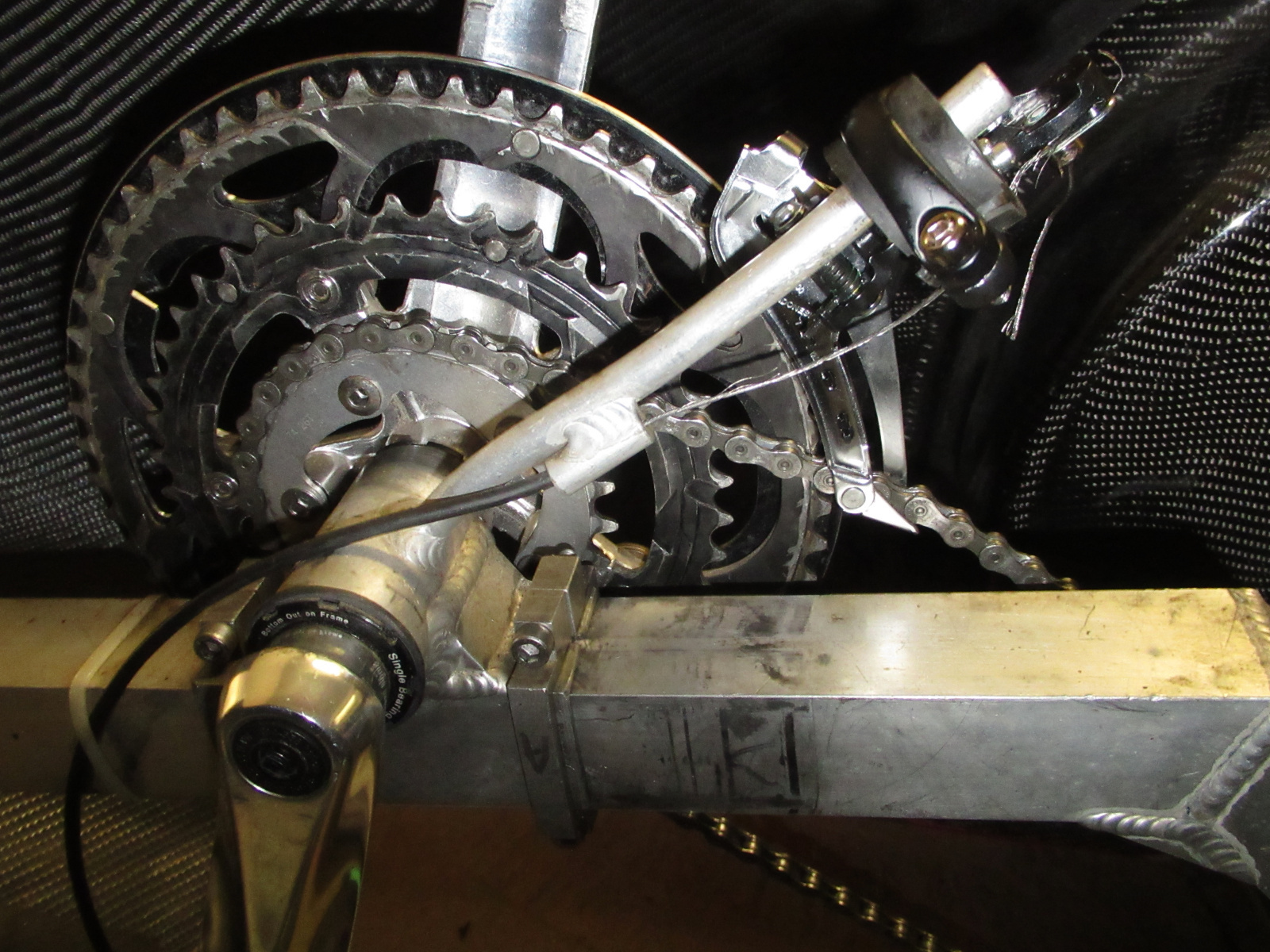
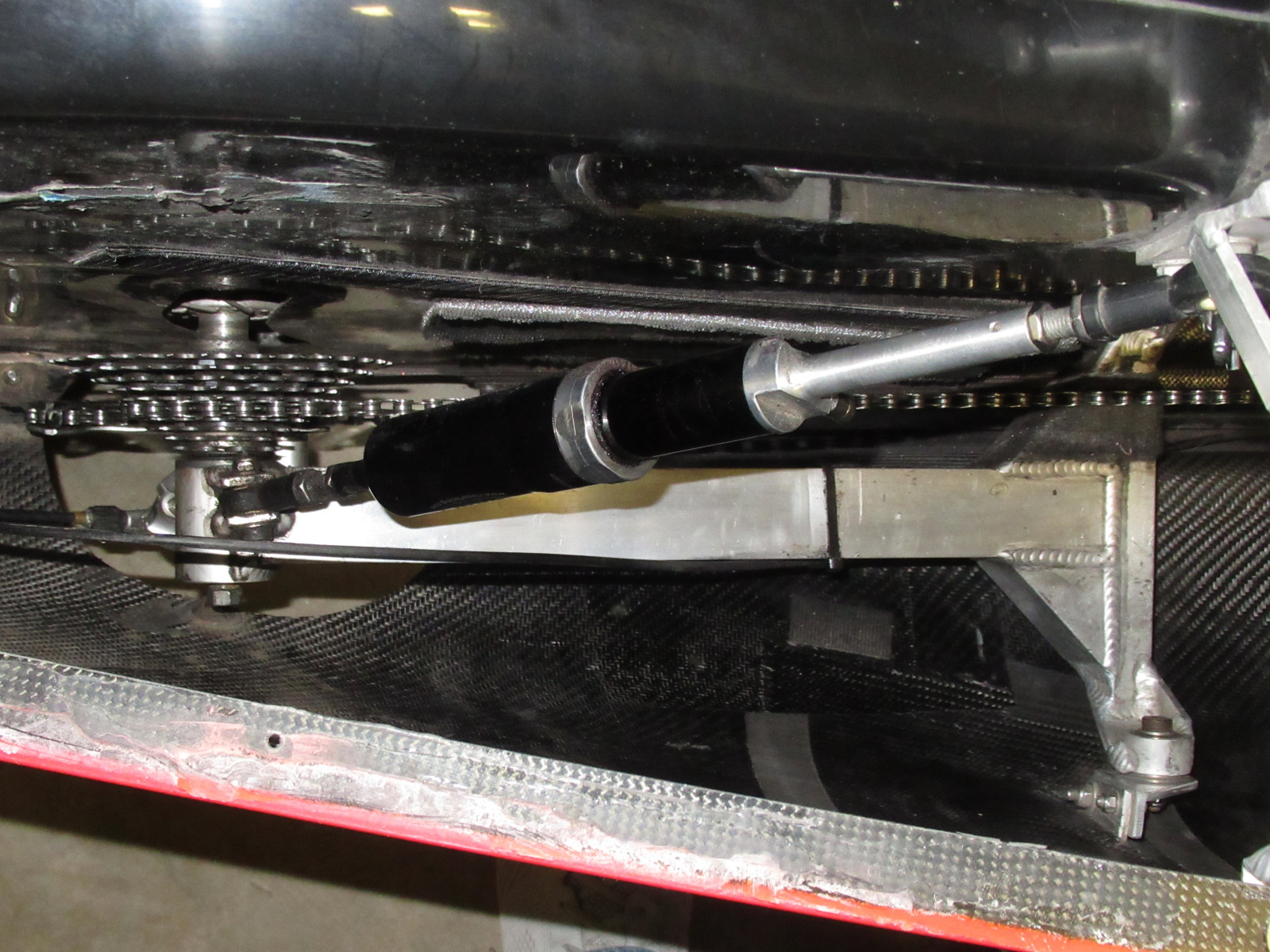
After years of looking, I finally found a used velomobile that I could afford to buy, that would fit me, and which was located not too far from my home in SW Michigan, USA
Rear Swingarm Replacement
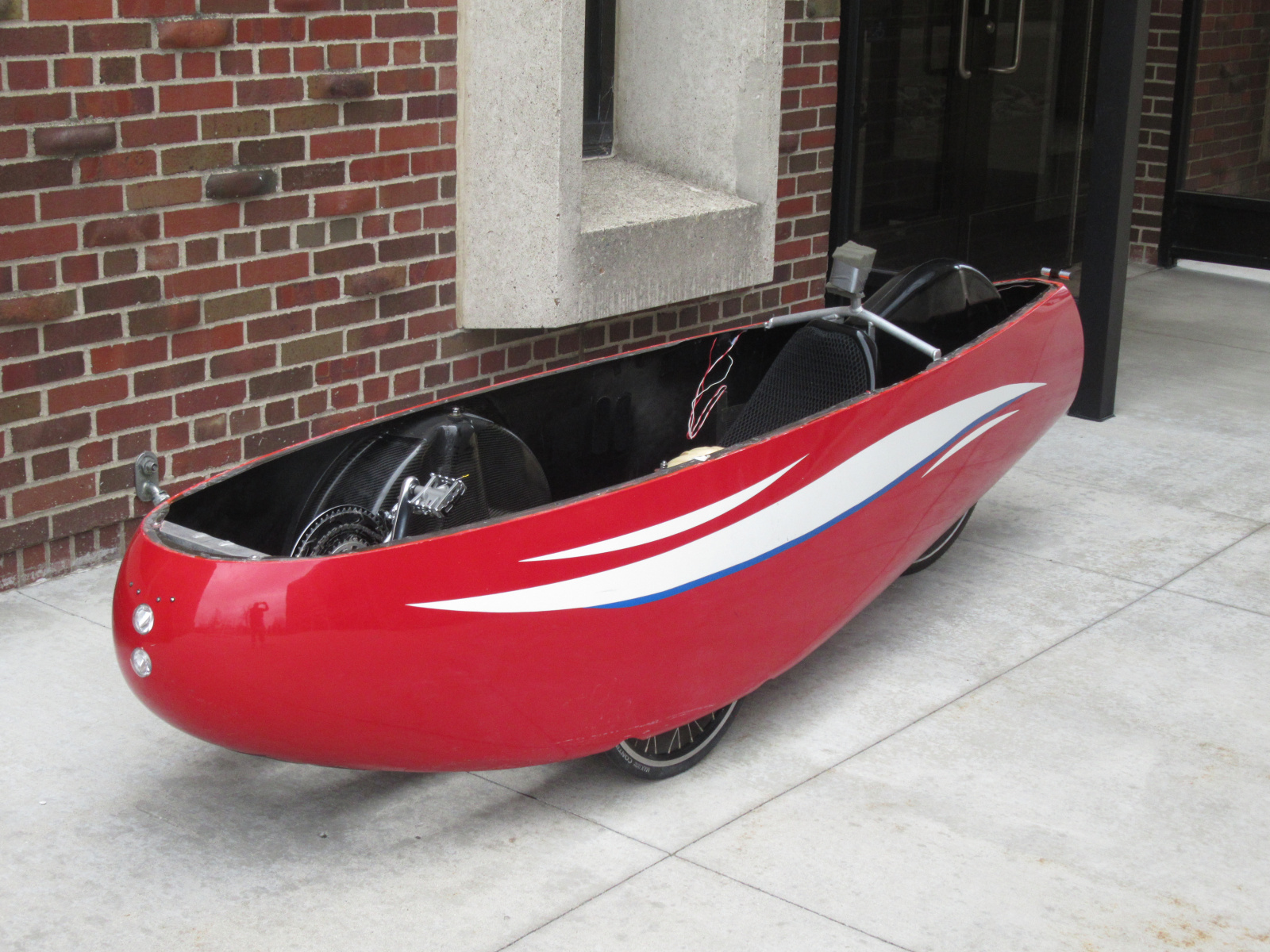
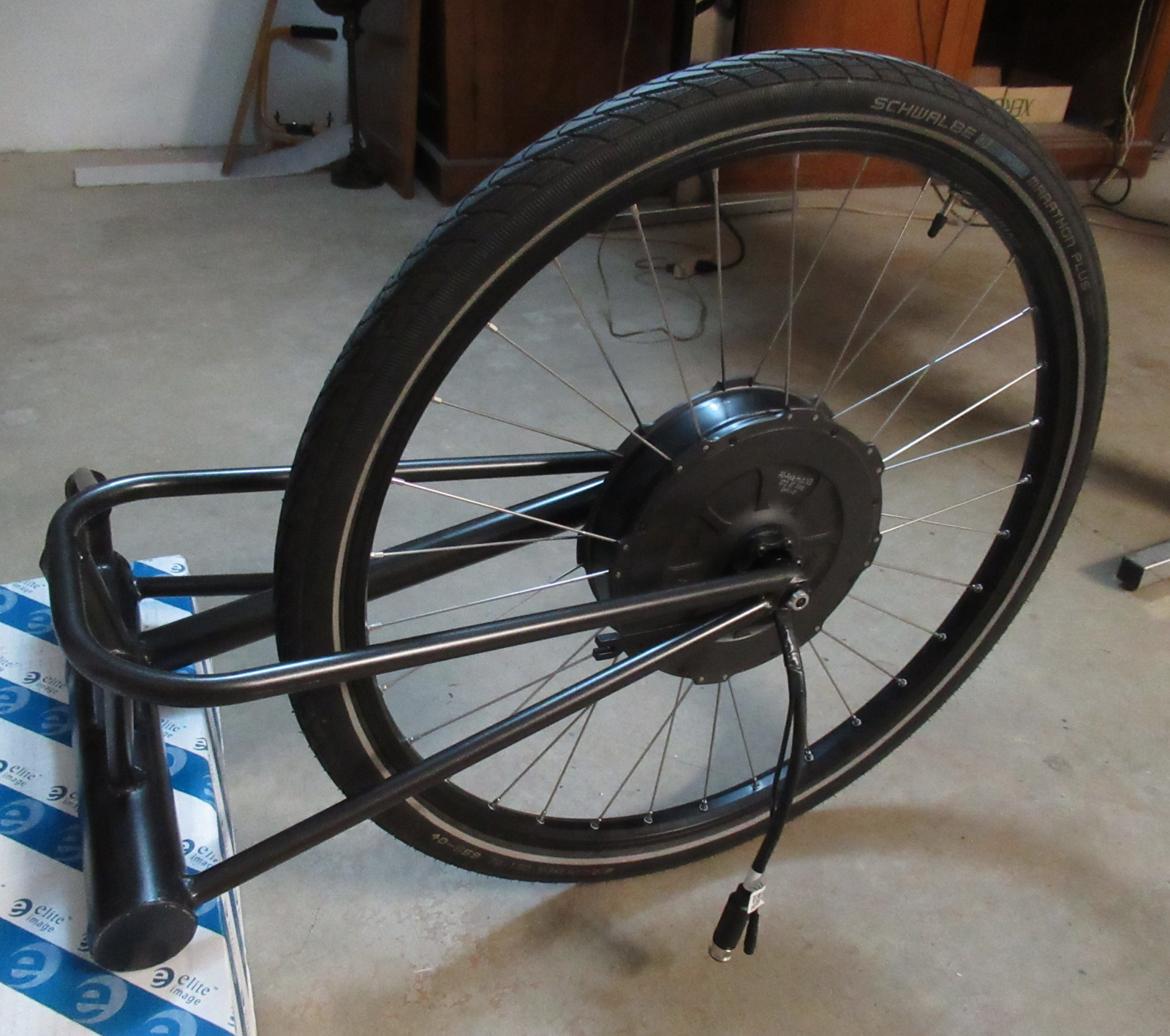
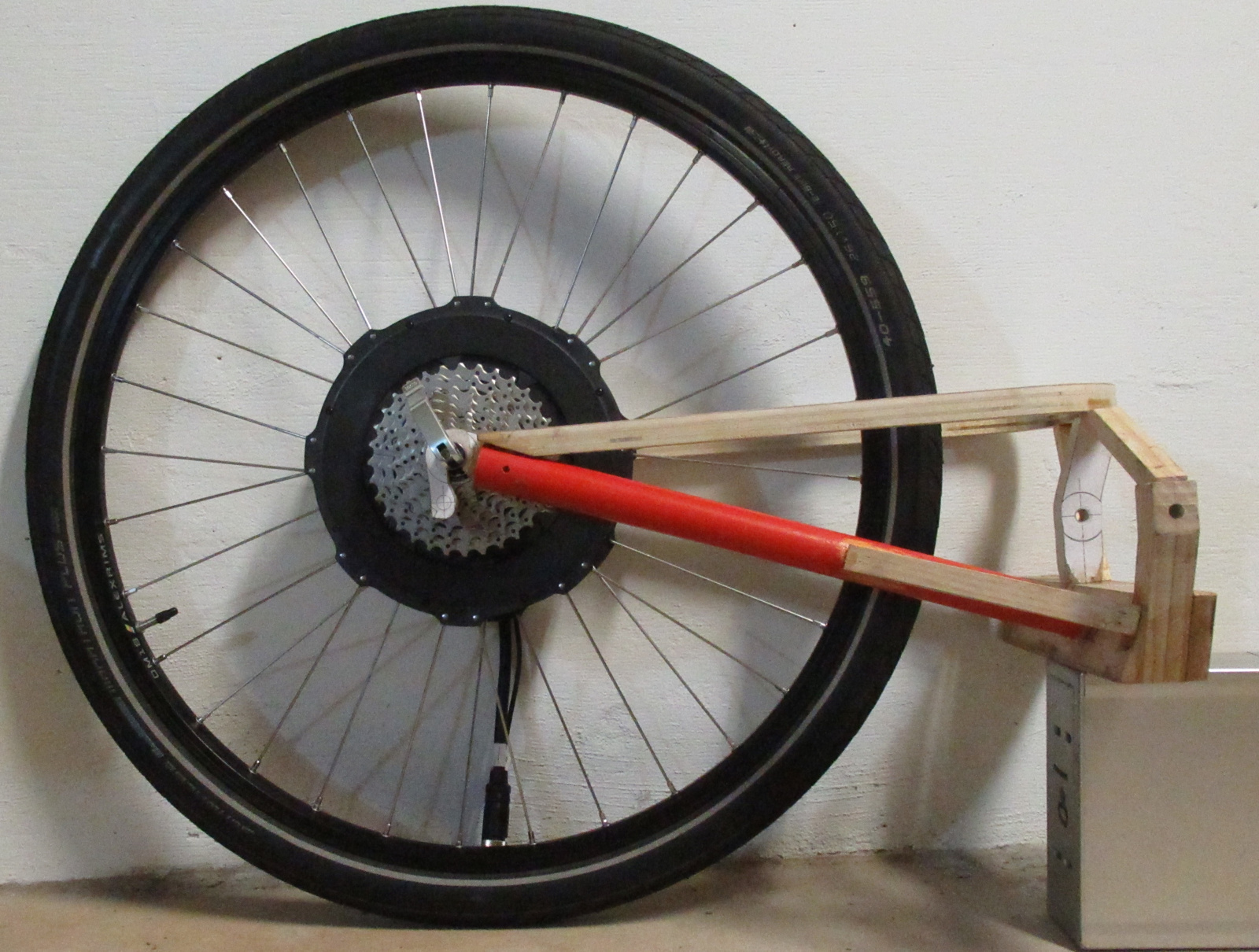
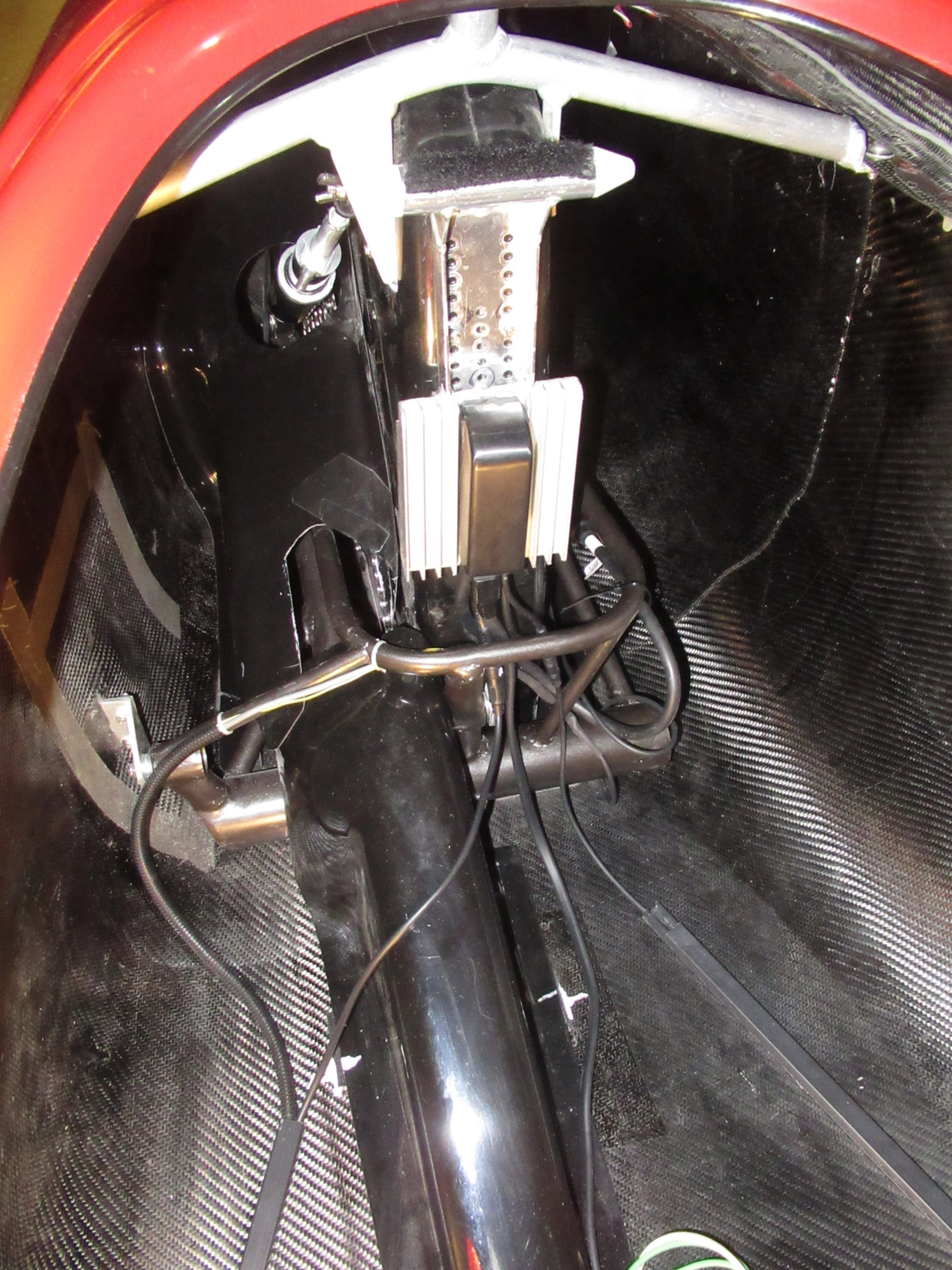
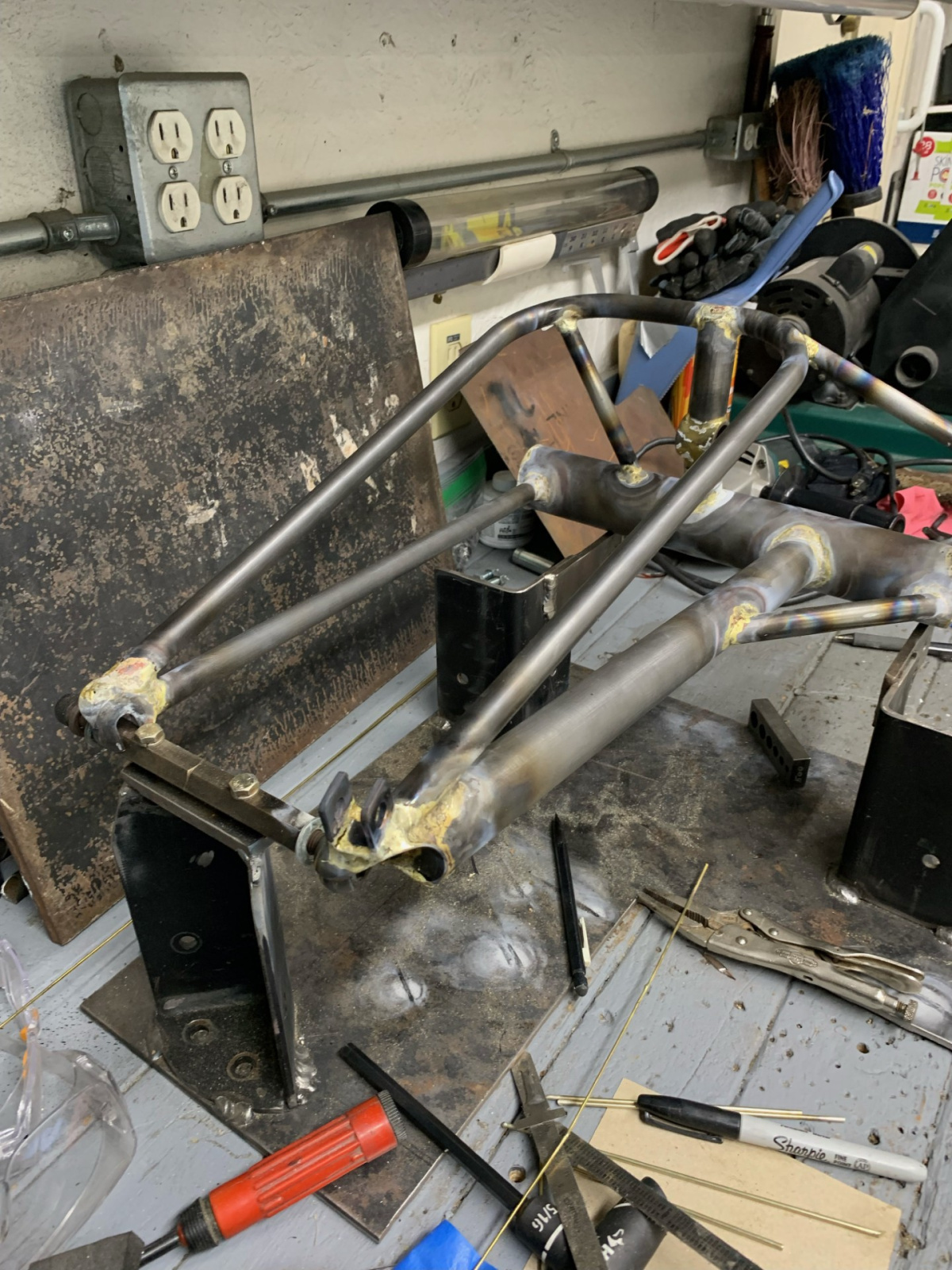
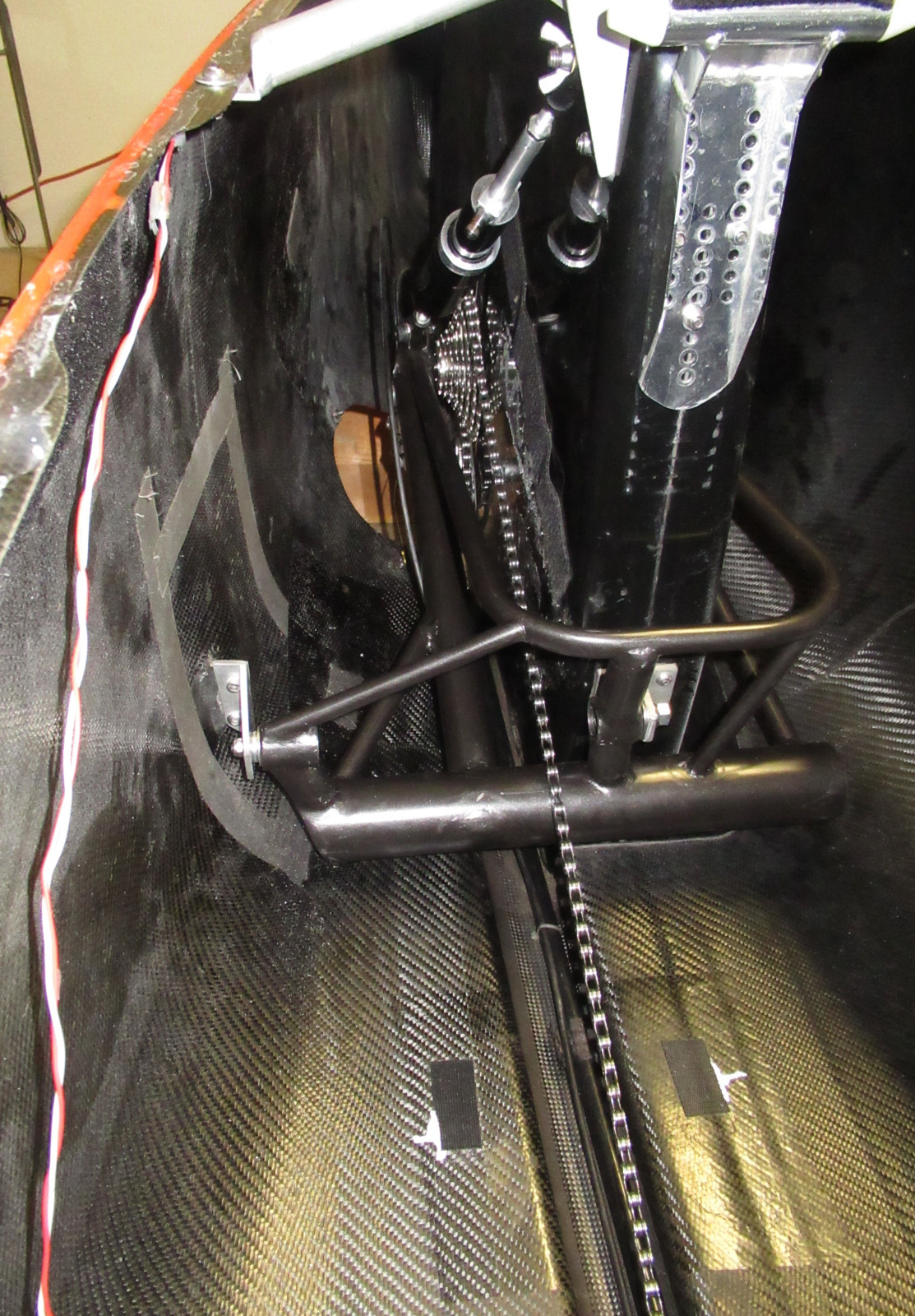
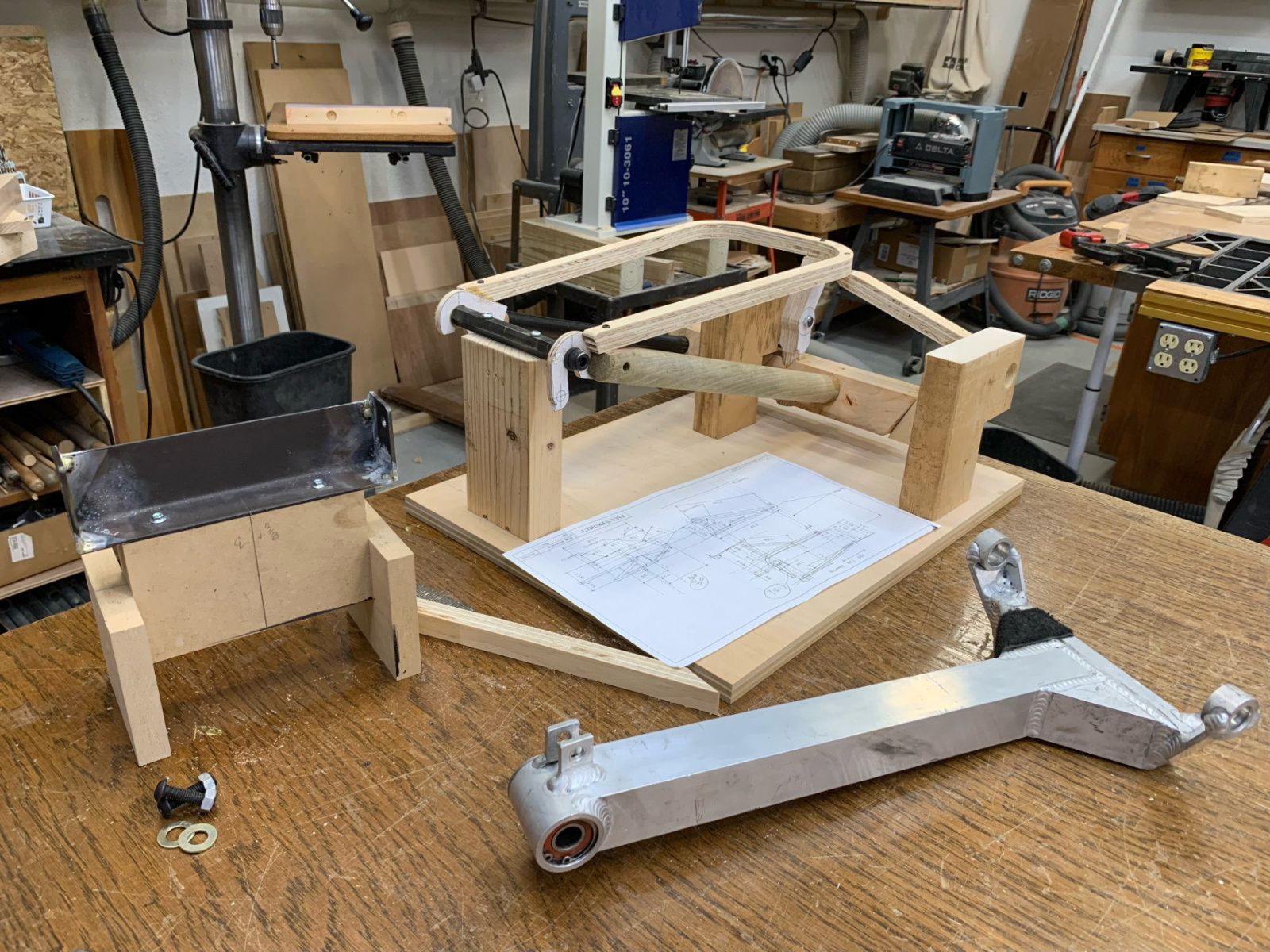
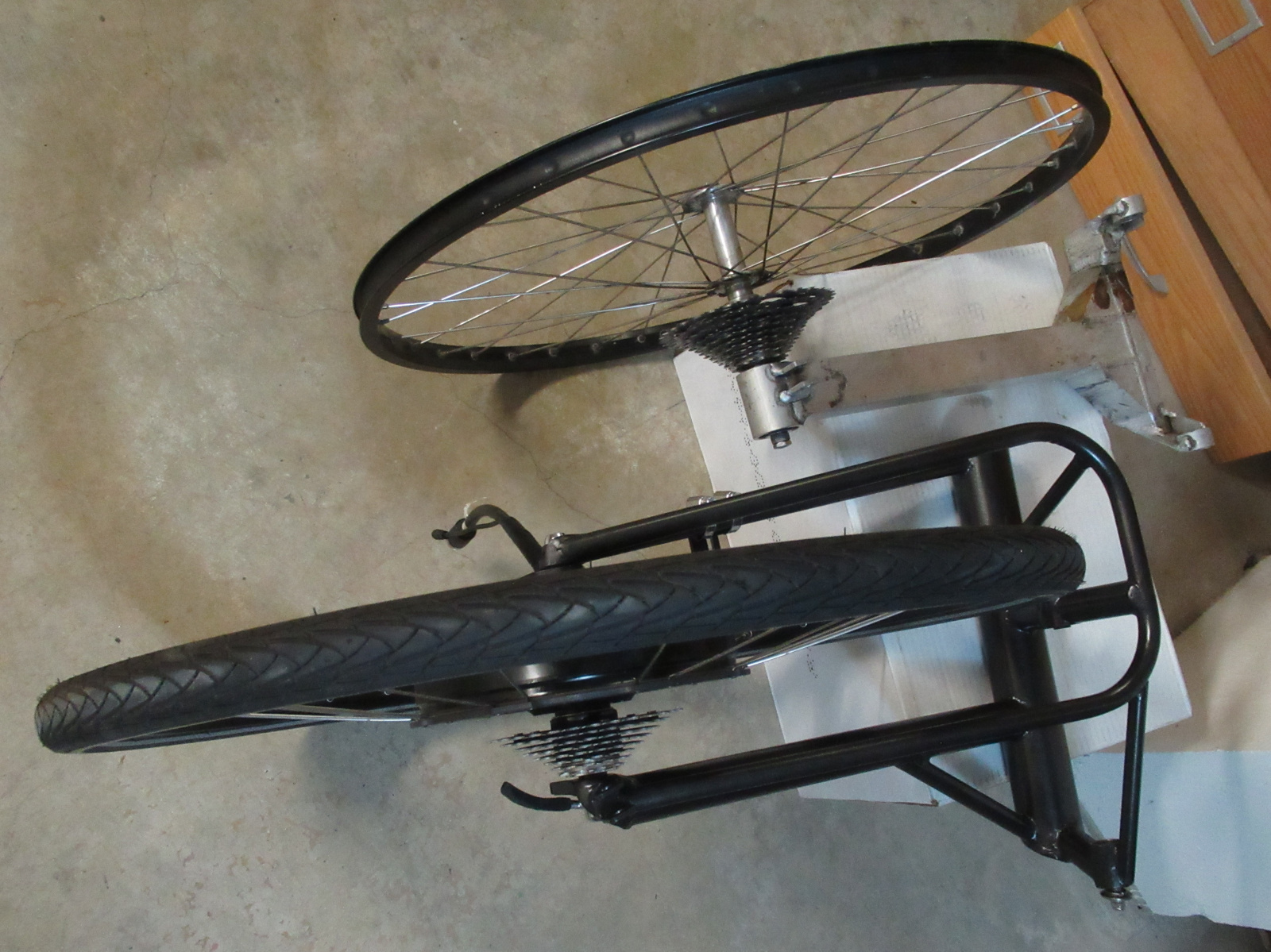
This was the major part of my project. I really wanted to have regenerative braking (because physics) so I decided I would use a hub motor in the rear of the trike. This required designing and fabricating an all-new swingarm so that both sides of the rear wheel would be supported. Luckily I was aided by talented and generous friends. For some reason, the photos in this section may not appear in the order in which I intended them, apologies.
Controls
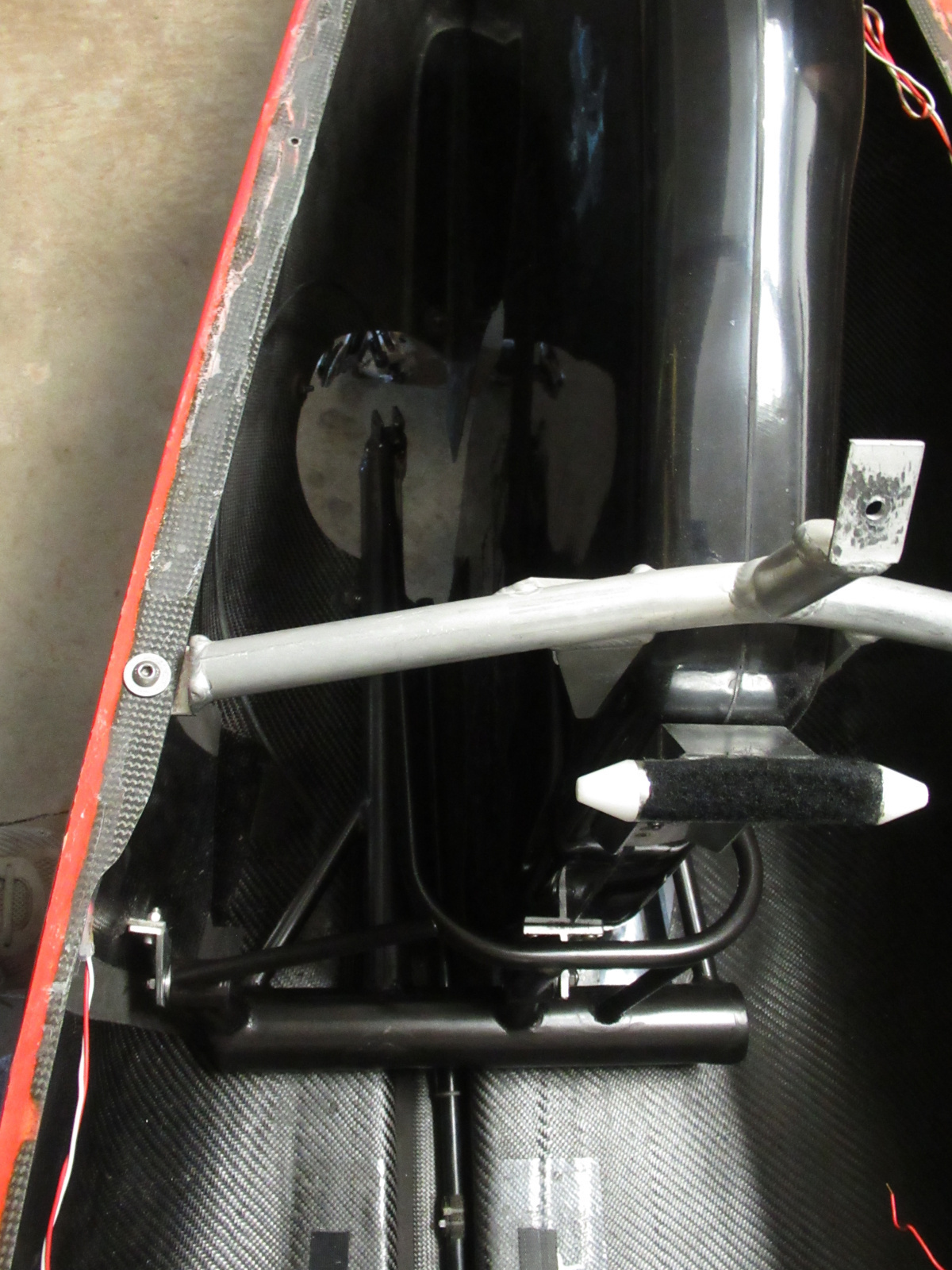
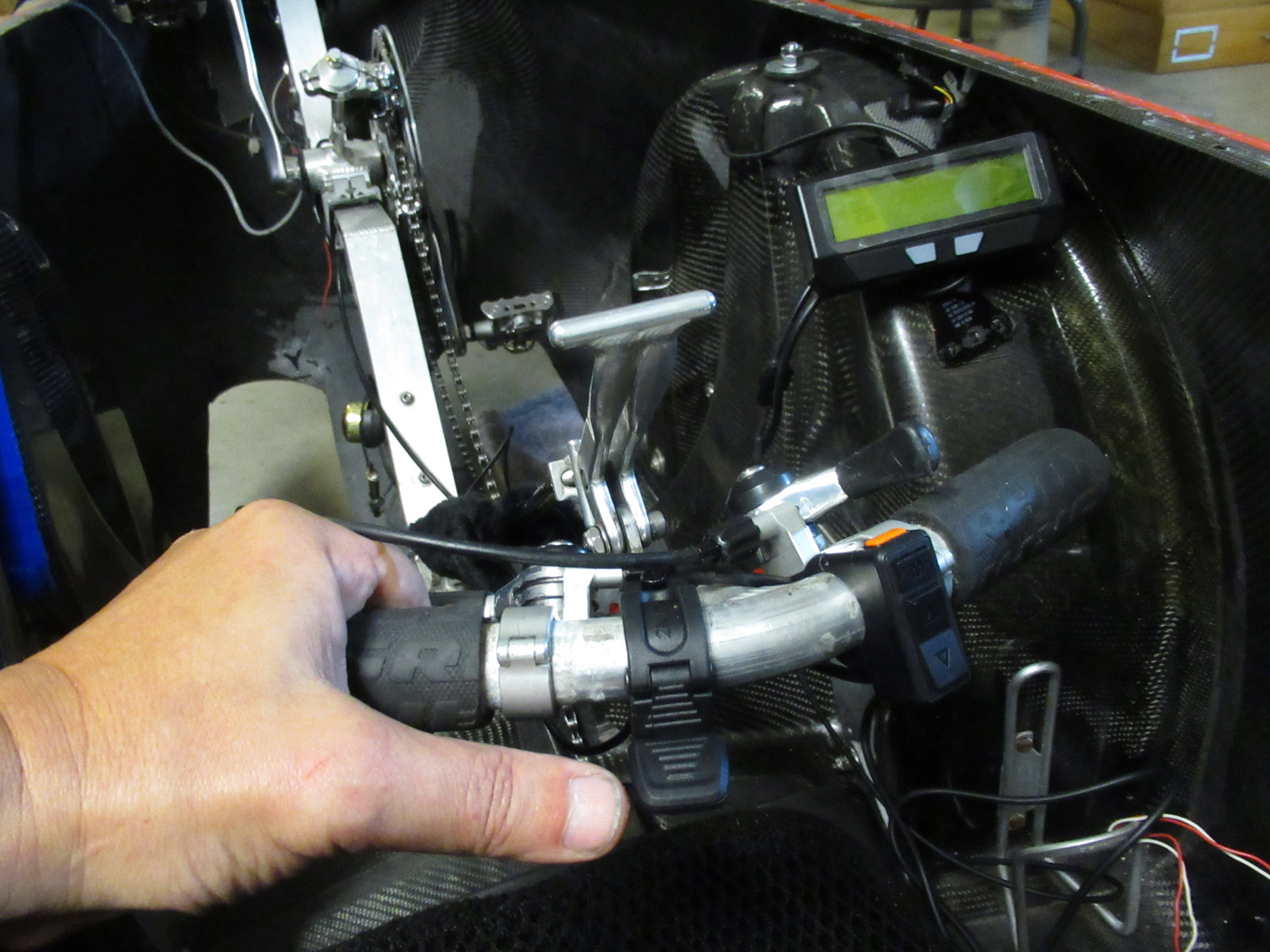
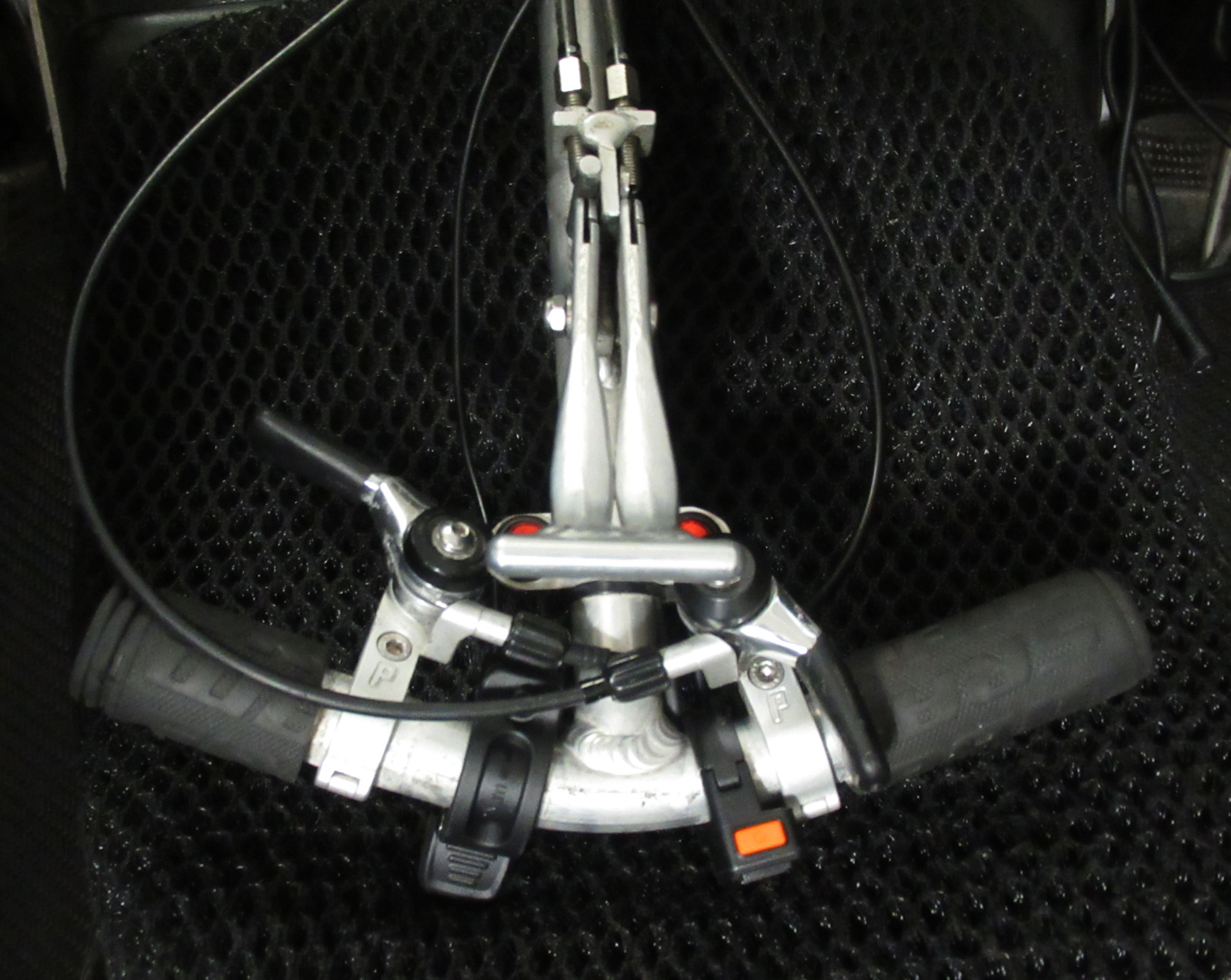
Original velomobile was well-equipped with lighting and an electric horn. Now it has two separate DC electrical systems, the one I added, at nominal 52 V for propulsion assist, and the other at 15 V for the accessories.
First powered tests
By late summer, 2024, the hybrid drive system was complete enough for some road testing.