Canadian

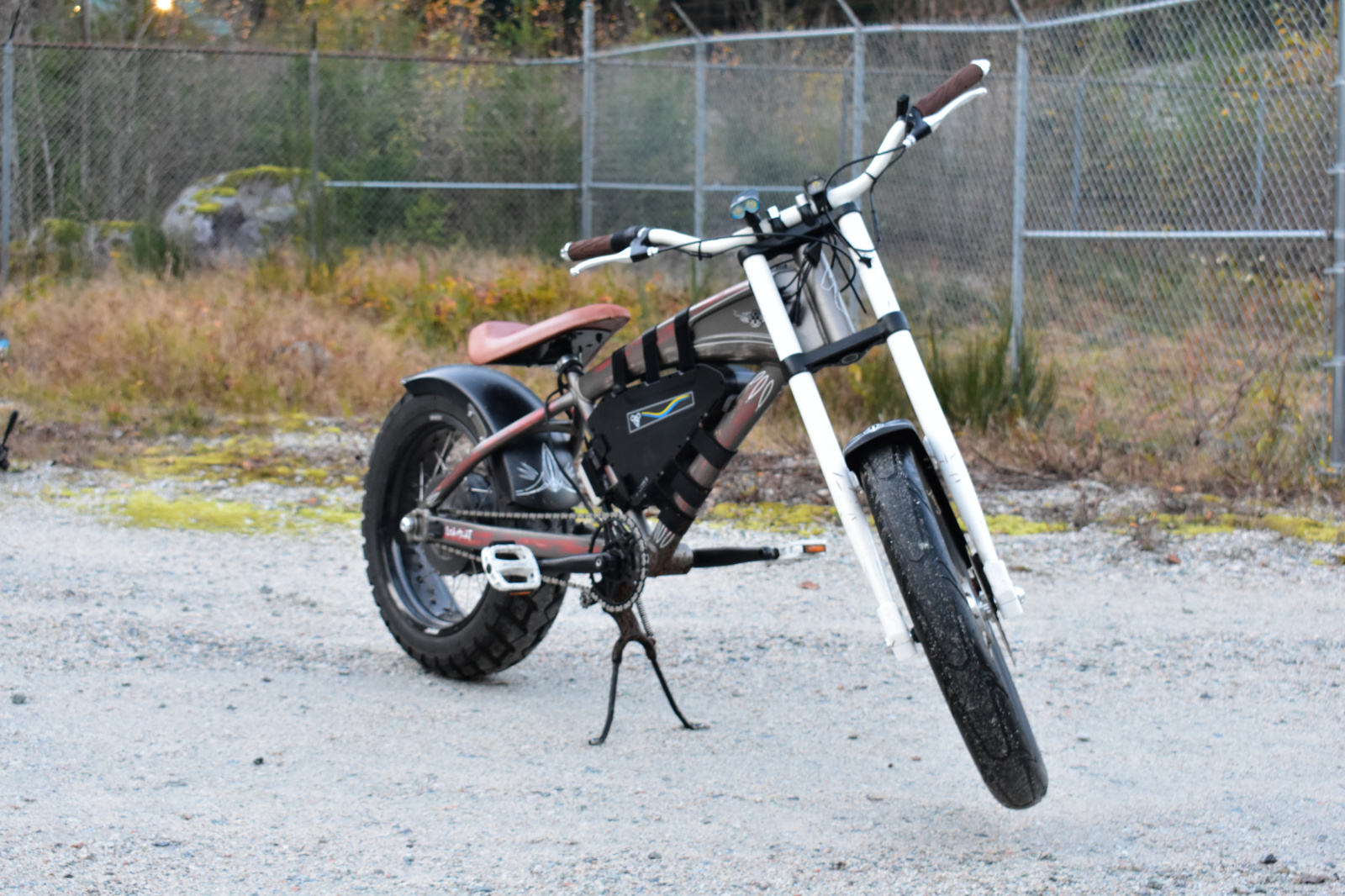
Specialized Fatboy
Vancouver BC
|
15
Published: 2026-11-08
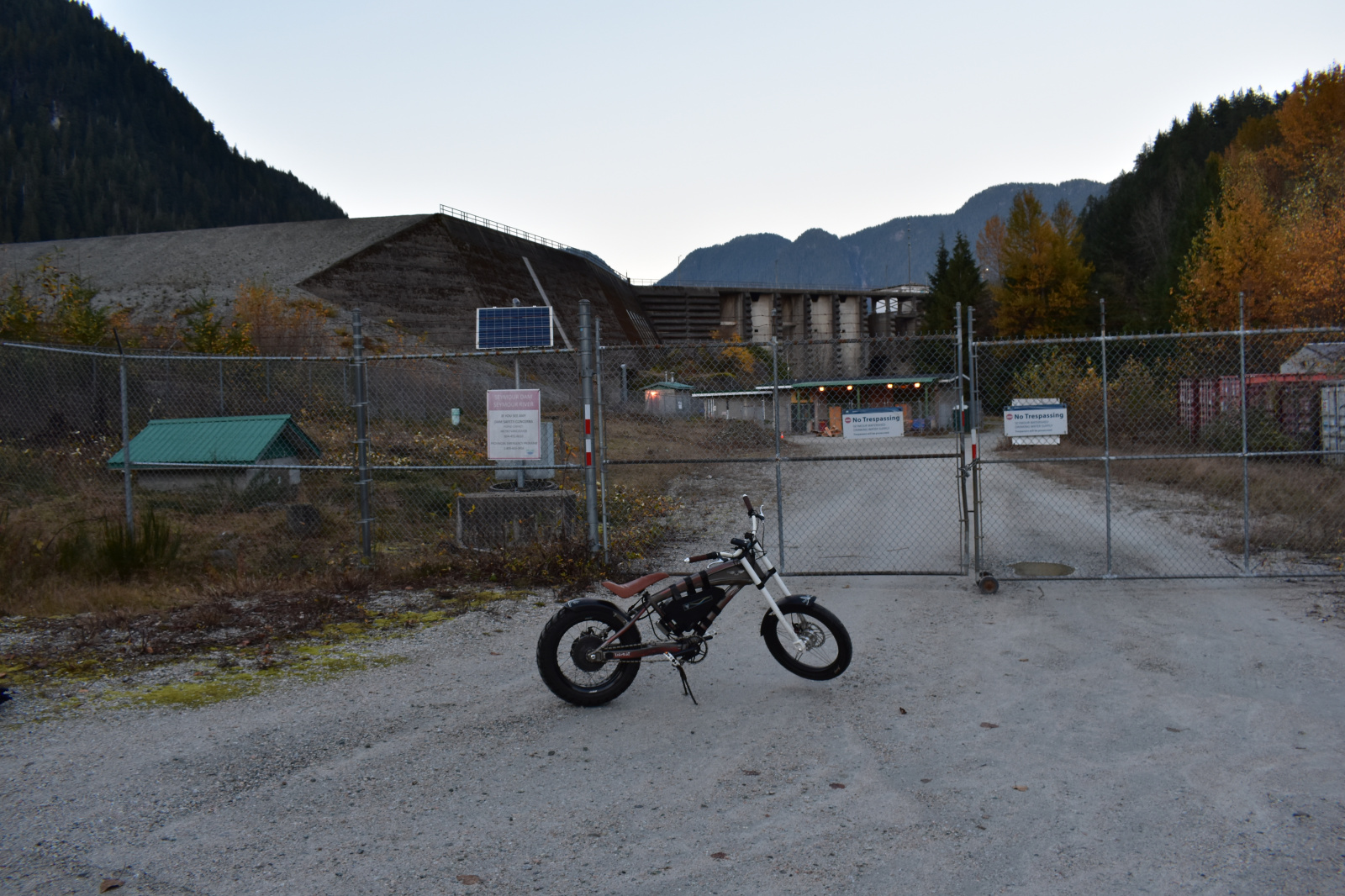
A 52V chopper inspired bicycle
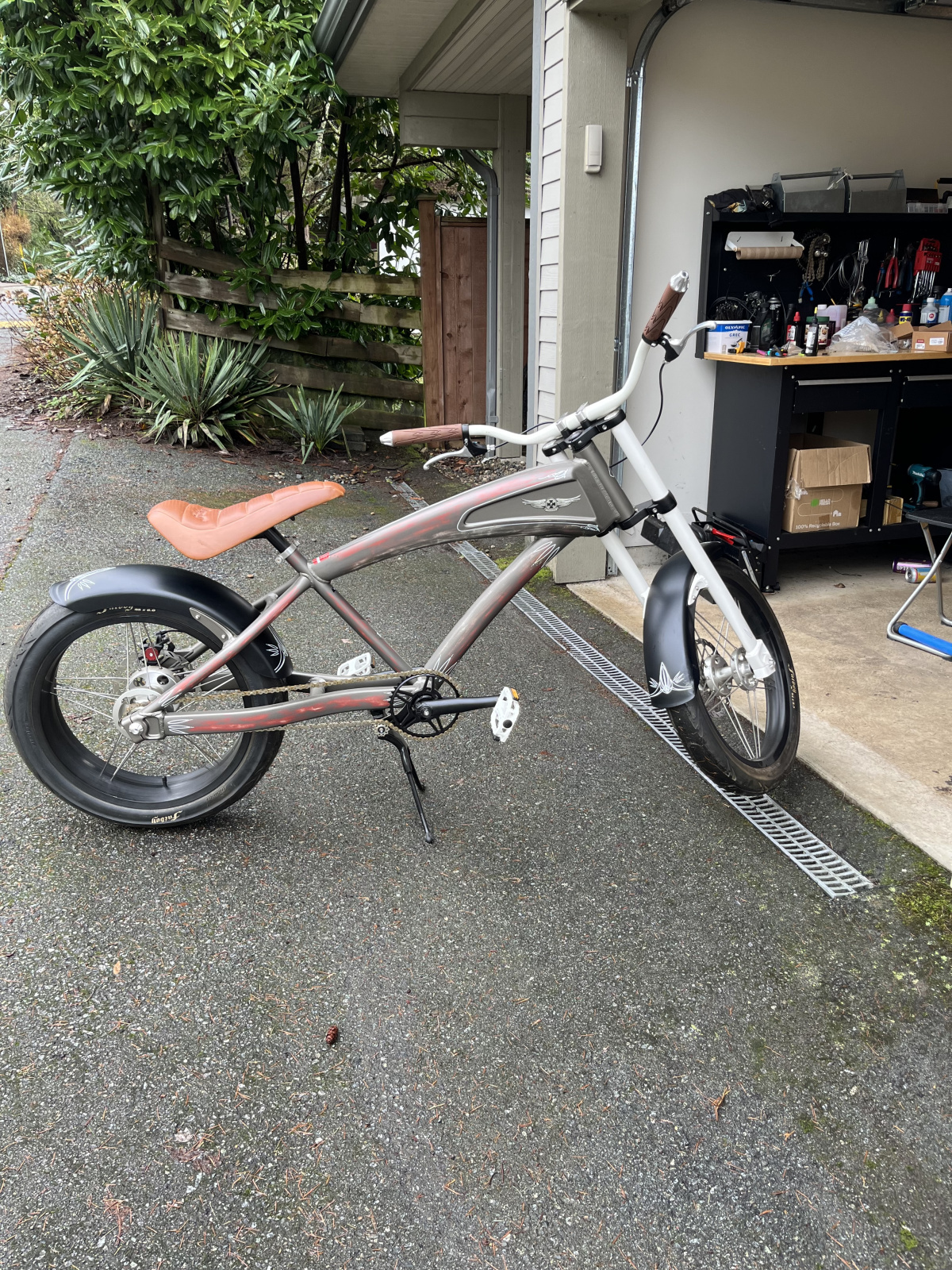
The donor bike
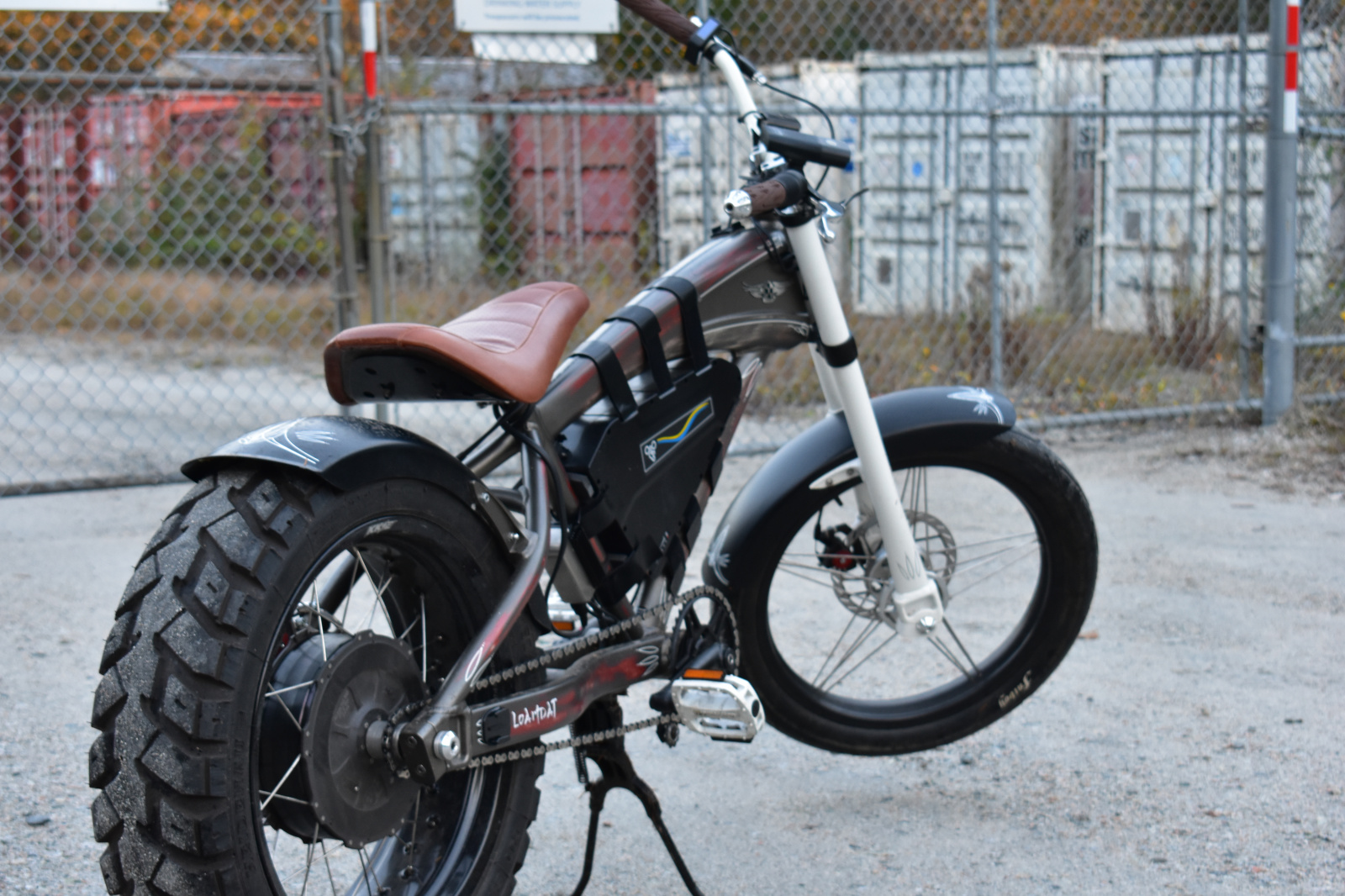
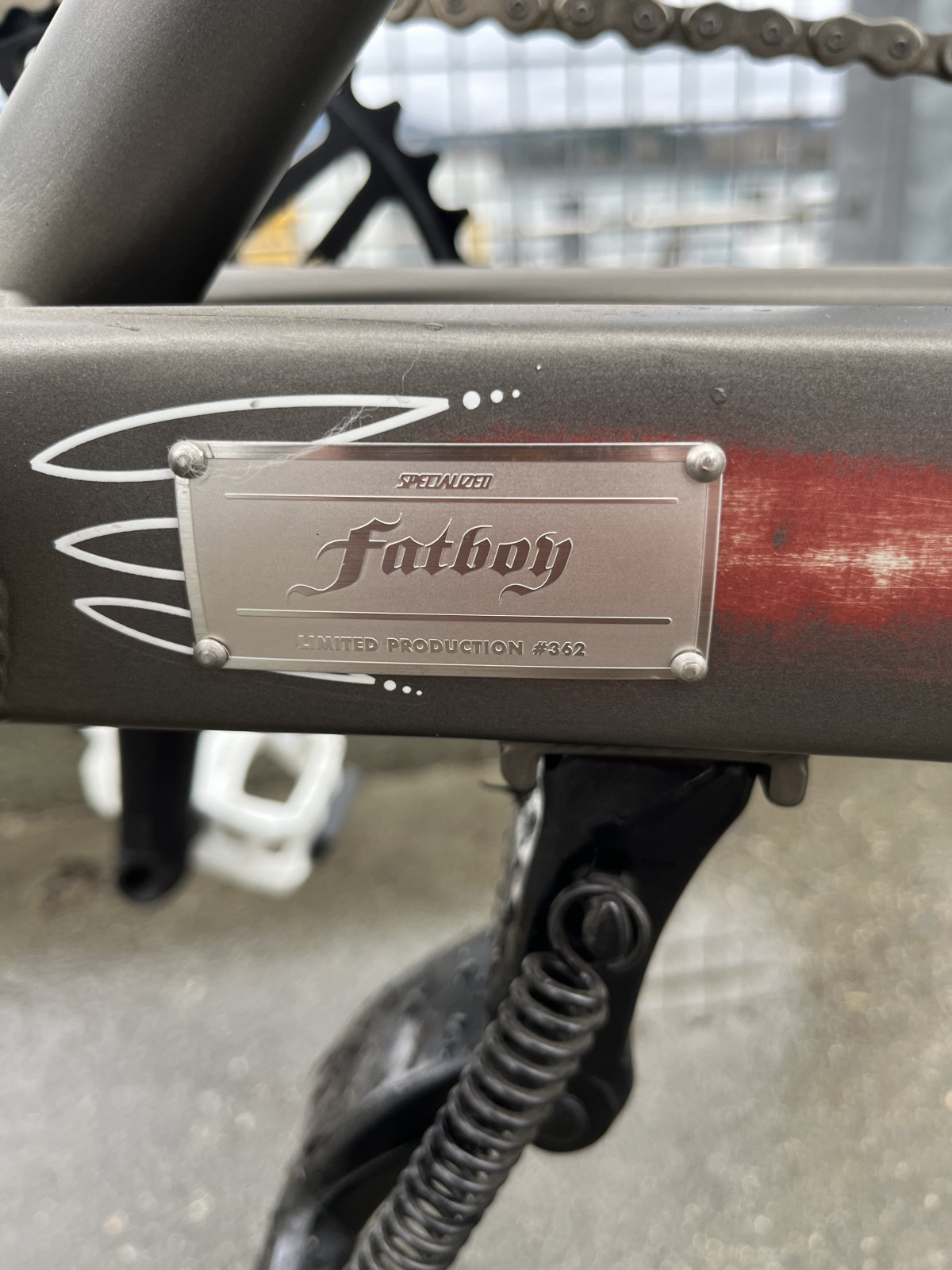
The process of converting this bike began back in January of 2026 when I saw a specialized fatboy chopper for sale on marketplace. The bike had been getting quite a bit of attention due to its rarity and pristine condition, so I was stoked when I managed to arrange a time to go check it out with the seller. It had been won at an auction after one of the caps cycles locations closed. There were under 500 Fatboy choppers produced by Specialized between 2005 and 2009, this one being #362 (see badge on non-drive seatstay). I had done my best to find out more about the bike beforehand, mostly consisting of staring at grainy picks of the bike on forums and asking around at a couple of shops in Vancouver that sold them back in the day. This yielded very little useful information. No one seemed to know what hub standard the bike used or if it even was standard, so I had no clue if I would be able to mount a standard hub drive motor on it.
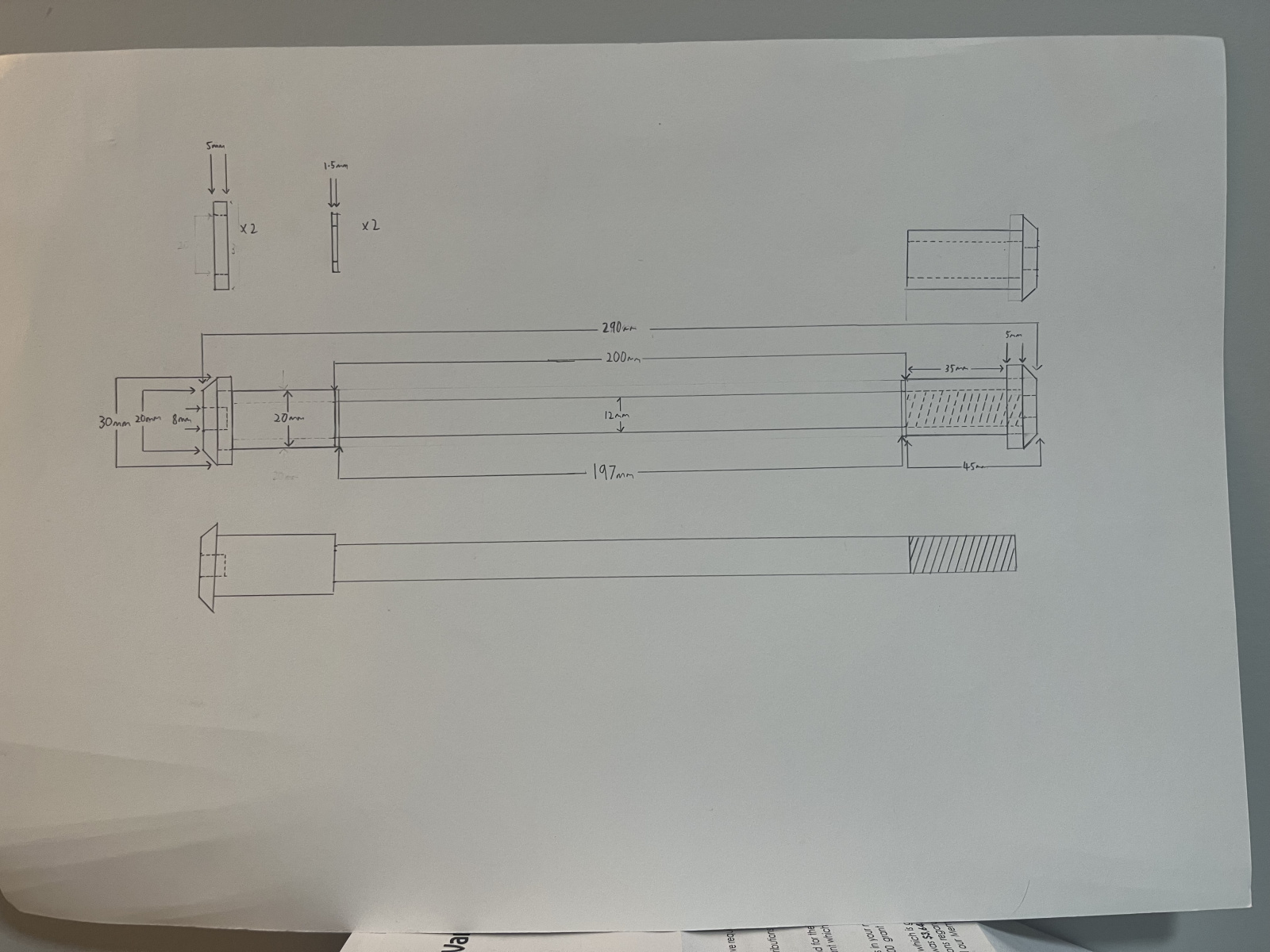
Custom axle
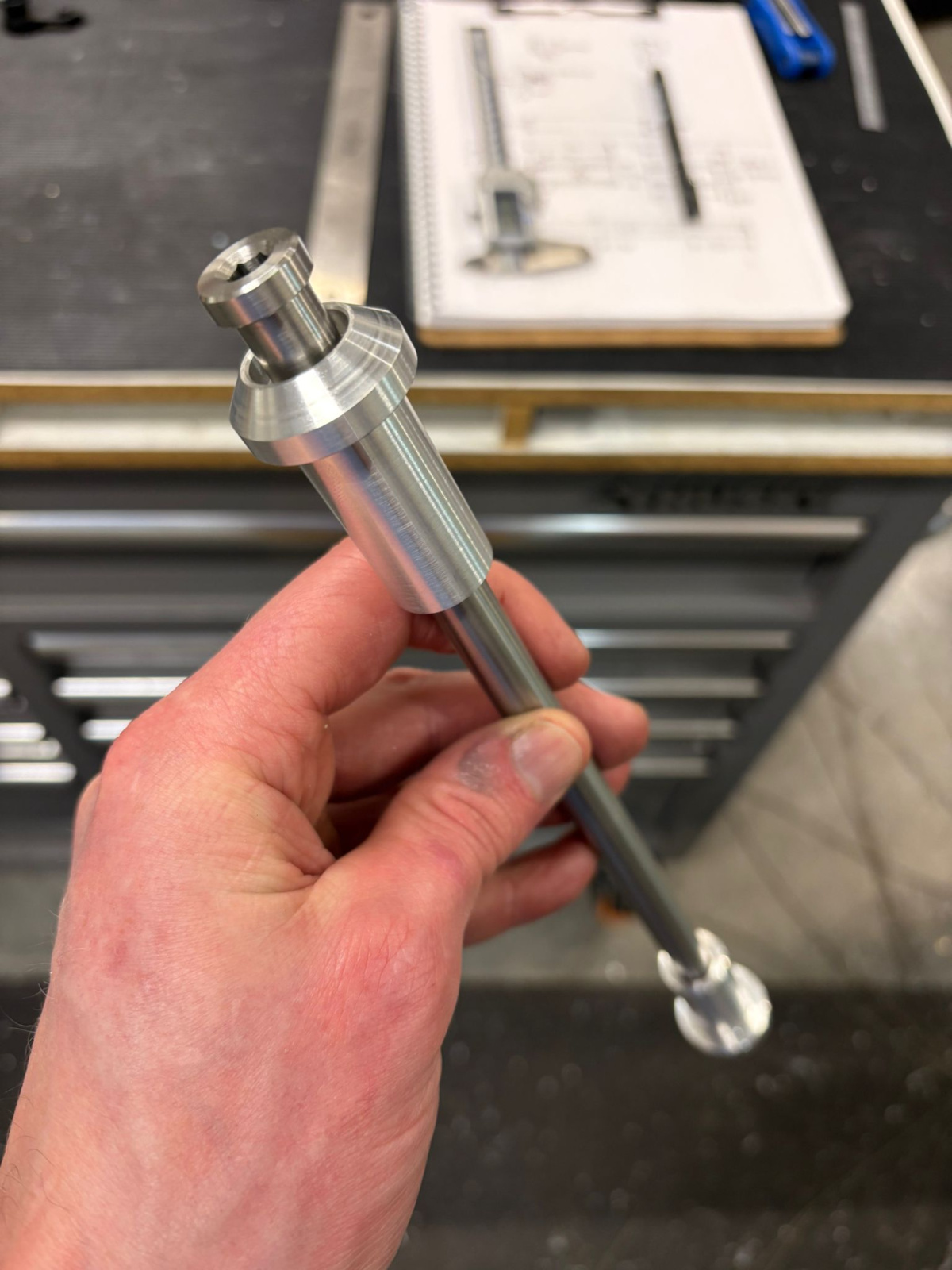
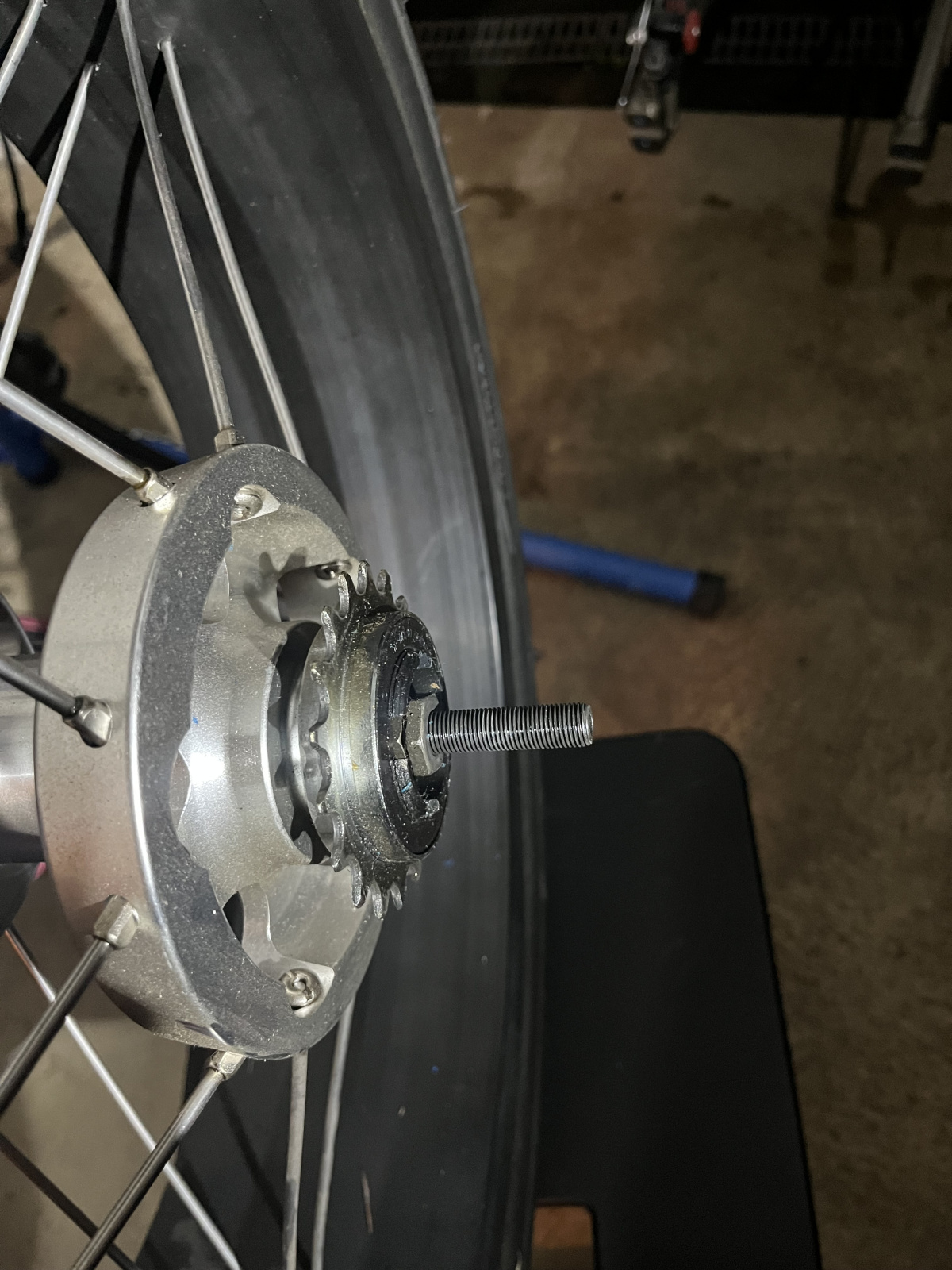
After taking it home and dismantling it to measure the dropouts I realized that the bike used a proprietary hub system. The dropouts measured 200mm inner to inner. The fork used another non-standard spacing, so I realized that I would have to make some modifications to run the Max45 all axle hub that I was set on using. Most of the machine shops around Vancouver either refuse to do one-offs or charge egregiously. I was eventually directed to Pete, of Pinner Machine Shop who specializes in one-off bike parts. After making some improvements to my design, Pete produced an axle of exceptional quality! With the hub now able to be mounted to the frame, it was time to build the wheel….
The wheel build
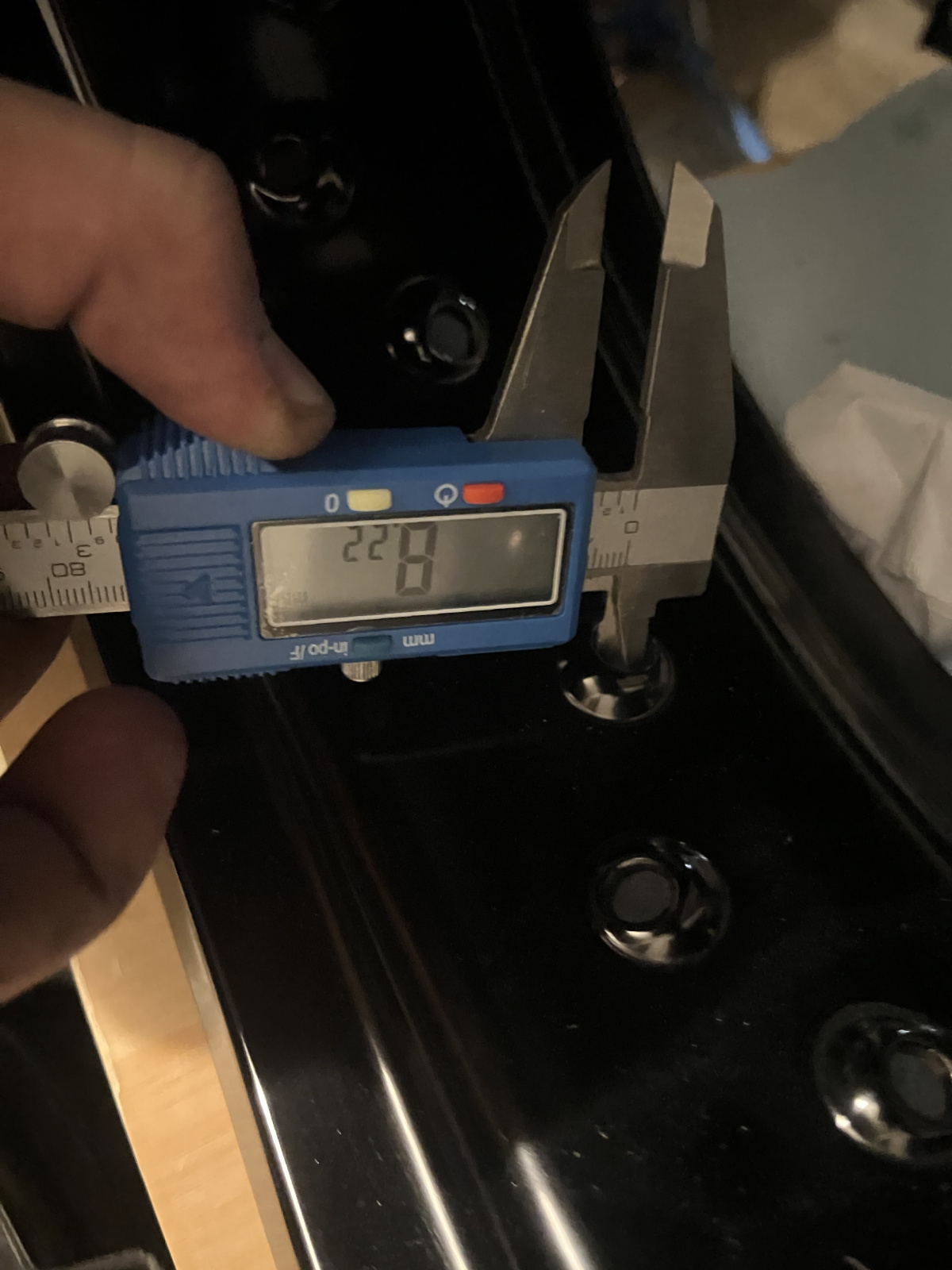
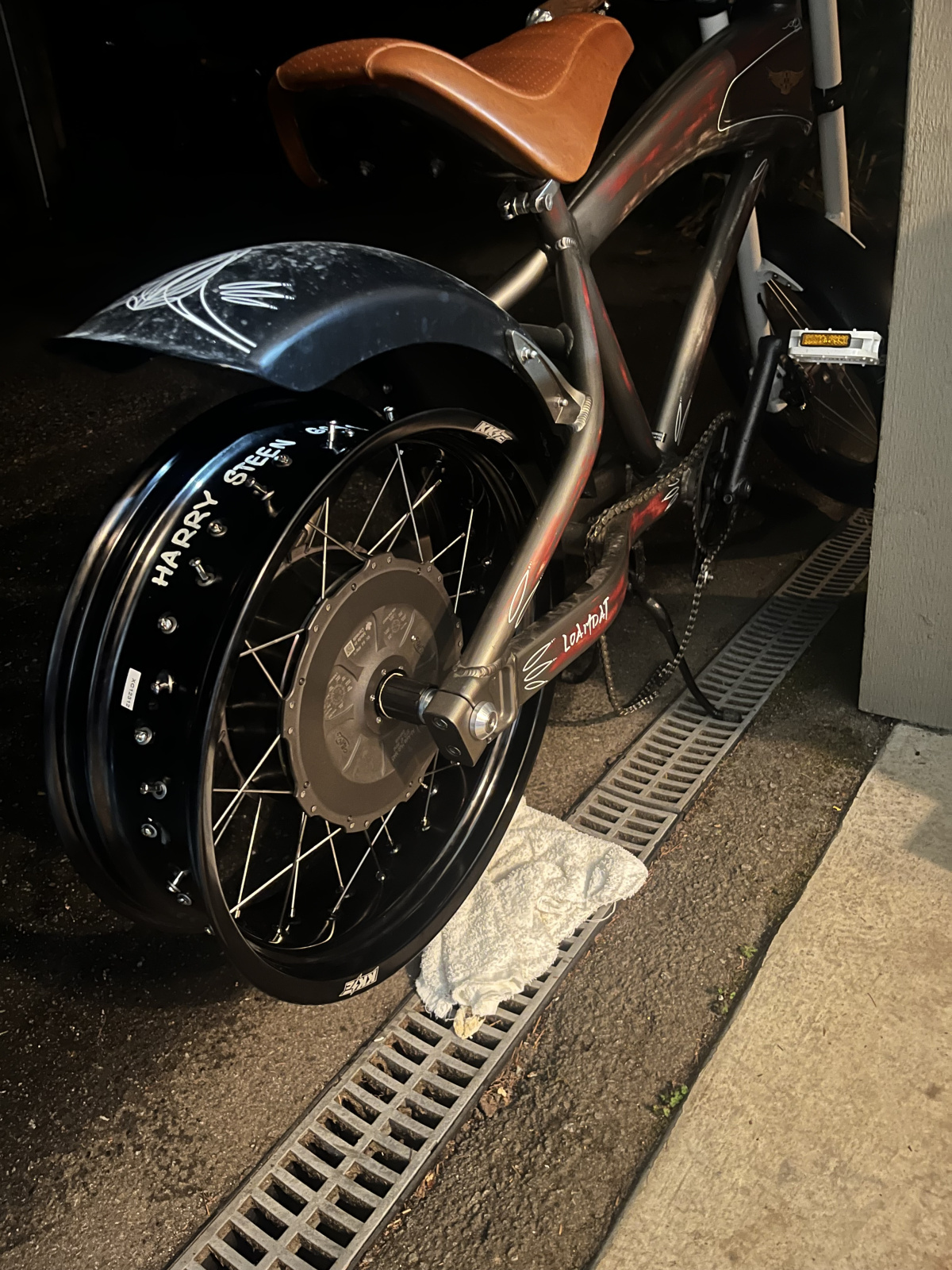
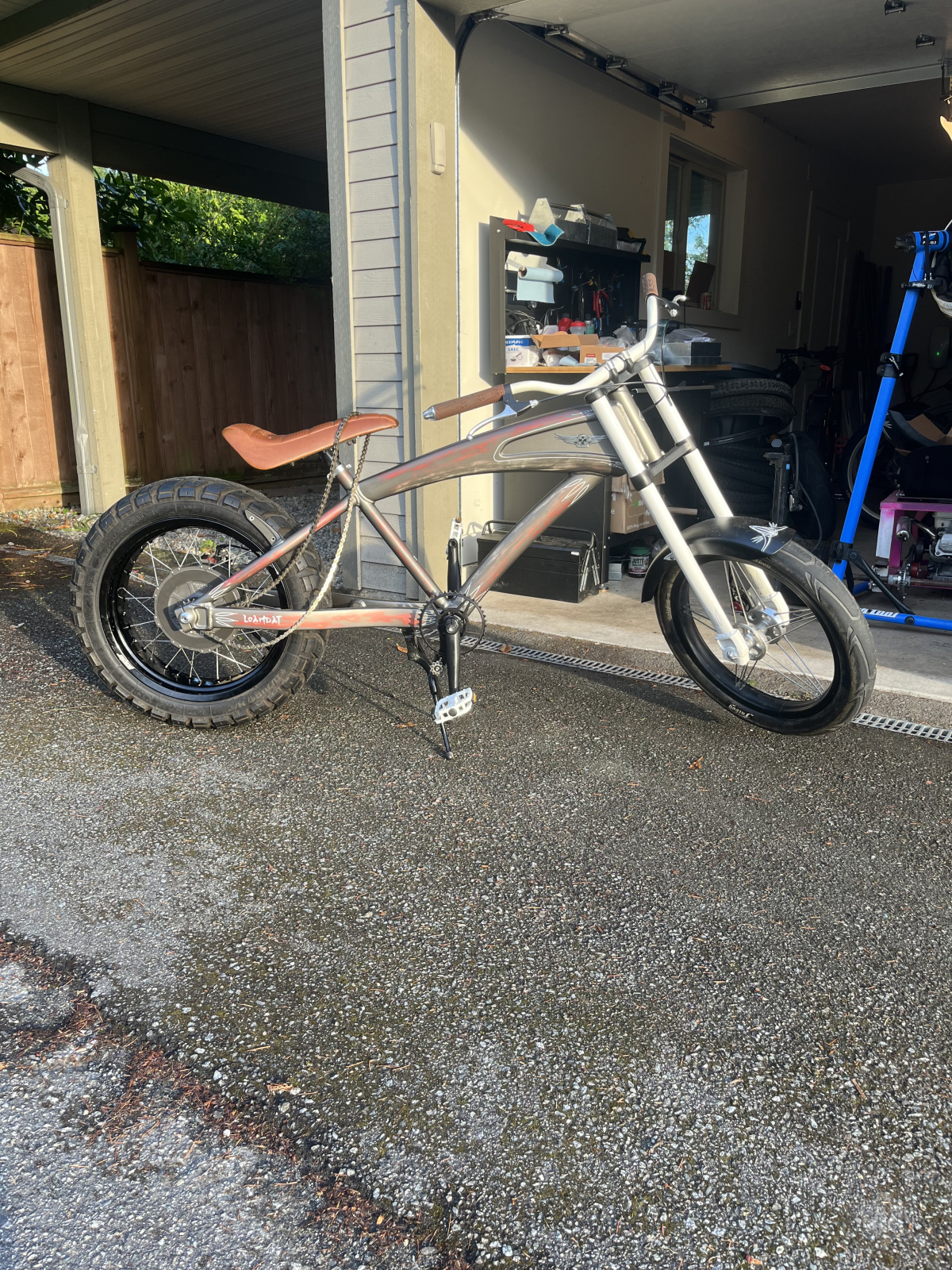
After scouring the internet, I was unable to find any suitably wide 24” 32 hole rims to lace to the motor. The original rear wheel used an 18 x 6” moped tire, so this was the closest I could get with a bicycle rim in height and width. I could not find any wide 24” slicks either. After some reading through endless sphere forums I realized that my best option would be to use a motorcycle rim and tire. Those who had laced their e-bike hubs to moto/moped rims had largely used special nipples that took a 12 gauge spoke, but were equivalent in diameter to a 10/8 gauge motorcycle nipple. The max 45 cannot take a 12 gauge spoke without being drilled out, which is not advised. I would have to use a standard 13 gauge spoke. I eventually had the idea to use washers between the rim and nipple head to fill out the space. Around this time, a set of 17” supermoto rims popped up on marketplace, the front measuring 3.5” wide and the rear 5.5”. They were 36 hole, but I was able to swap the plates on the Max45 for 36h. When I brought the idea of lacing the moto rim to Robert, the head wheel builder at Grintech, he was understandably sceptical but was happy to help me out anyway. He provided me with the correct spoke lengths for the build, spokes and washers, and valuable advice on how to go about lacing and tensioning the wheel! The rim was far too wide to fit in a normal truing stand, so I had to use the frame of the bike. I had a buddy mount a 17” 150/70 adventure bike tire to the wheel. The tire rubbed the fenders of the bike so I trimmed the lugs with a box knife. The wheel has almost 2000km on it as of today. It is true and the spokes are tight, despite me hitting a few gnarly potholes.
Kit install
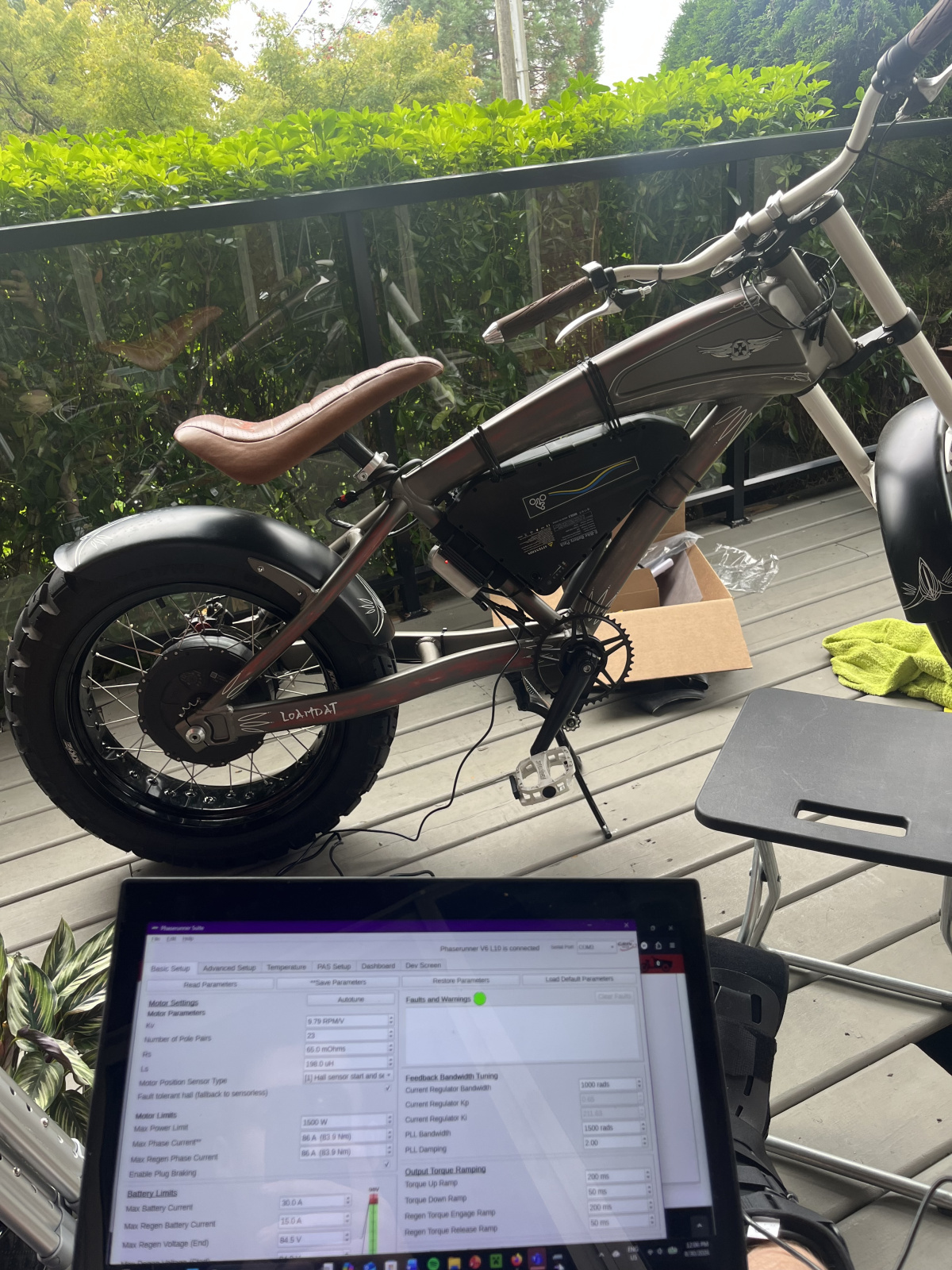
With the last part of the puzzle sorted out, it was time to order the rest of the kit. I had considered building a custom battery for the bike- two rows of 18650 cells in the space behind the seat tube and in front of the tire. I went as far as to bend up a sheet metal box that fit in the space but eventually decided to buy a battery as building one was more of project than I was willing to commit to. I went with the 52v 31ah battery offered by grin- a good mix of power and capacity. It fit perfectly in my front triangle. For the speed controller I chose the phaserunner L10. Its sleek profile and compatibility with other grin products made it the obvious choice. The bidirectional twist throttle was a economical means of taking advantage of the regenerative braking offered by the max45 all axle. Around this time I broke three metatarsals in my foot on my mountain bike. I was able to install the kit with a some help from my family and friends, despite not being able to walk (it’s that easy) and after a couple hiccups in programming the phaserunner (due to my computer being old and slow, no fault of the controller or programming software) the bike was ready to ride!
Riding the bike and concluding remarks
The bike ended up being crucial in me being able to get to work as I could not drive in the air cast nor pedal a normal bike. I put 1000km on it in the first month of having converted it, riding all over Vancouver. The regenerative braking offered by the max45 all axle proved to be very useful in both extending battery life and preserving my brake pads which would probably need to be replaced every other week stopping a 100lb bike. I commute to Annacis island from North Van which works out to be a 50km round trip, which I can do on one charge in the same time as it would take me to drive. This project wouldn't have been possible without a number of people but I owe thanks in particular to the grintech crew. You guys/gals rule!