
 Canadian
Start Here
Looking for an ebike conversion and not sure where to start?
For over 20 years, Grin has been helping people build their own electric bicycles, and we love every build, whether it's your first or your fifth. Many of our customers are seasoned builders who keep coming back, but we're just as excited to welcome newcomers ready to create their first ebike. If you're just getting started, there's plenty to learn. This page will walk you through the essentials so you can navigate those initial steps.
Is a conversion from Grin right for me?
Presumably you are here because you want an electric bicycle for one reason or another (there are lots of great reasons) and are open to the possibility of converting a regular bike rather than just buying a pre-made factory ebike. There are quite a few advantages to this approach, which we have summarized in our article on DIY vs factory ebikes.
That said, a DIY retrofit is not for everyone and there are now countless factory ebikes on the market spanning the gamut of price ranges and performance. If you are happy with one of those and just want to buy a turnkey setup rather than fiddle making your own, then by all means that's what you should do.
If you are drawn to the DIY side for any of the reasons above then we are here to help. There are two qualities that are important to us if you're planning to be a Grin customer:
1) You are keen to take on a project more than just buying a product
2) You generally have a hands-on and a can-do attitude when it comes to making and fixing things
Not everyone is on board with item 2 but if you have a close friend, family member, or neighbor who fits that description and wants to help you with the build and any troubleshooting, then that works too. We don't expect you to have a multimeter in your toolbox to measure voltages, but we'd expect you to gladly purchase one if a certain troubleshooting step requires it.
What parts are needed for a conversion?
An ebike conversion at the very minimum requires a battery pack, a motor, a motor controller, and a throttle or pedal sensor. For an explanation of what each one does, read our summary of ebike components.
At Grin, you have the option of getting all of these parts together as part of a kit bundle, or ordering them separately from our parts page. You can also order some parts from us and others from a third party if you know what you are doing. Unlike many places we are totally cool with that.
How hard is it to install a kit?
Fortunately the ebike components that we sell today are much easier to fit on a bike than they used to be. You don't need to solder electrical joints, crimp connectors, lace up a wheel or anything like that. If you have the general mechanical aptitude to fix a flat tire or replace and adjust your brakes or derailleur, then you will likely be able to install a kit without too much difficulty in an afternoon.
Here is a video demonstration we did of a bike conversion at the 2019 BC bike show which shows the process of installing a basic front hub motor kit package.
We also wrote an article for Make Magazine which shows the step-by-step sequence of a similar kit install with the downtube batteries.
Those are the basic scenarios. Adding a torque-sensing bottom bracket, or working through the small fitment quirks that sometimes come up, can add a couple of hours and call for a few specialty bike tools.
How do I choose the right kit?
If you are new to this, the quickest path is through our Kit Builder. This utility walks you through configuring a complete Grin All-Axle kit, our most popular, made-in-Canada hub motor, one step at a time.
Otherwise if you want to explore all the motor options that we offer, check out our hub motor comparison page that summarizes the details of each model currently for sale at Grin. This lets you understand the pros and cons of each motor choice, from small geared bafang hubs to the large and heavy Nine Continent RH212.
If you've got a fairly conventional bike with slotted dropouts then most of these front and rear hub motor kits will fit without much fuss. If you've got either a very modern bike frame with thru-axle hubs, or a more special bike (tandem, trike, cargo, belt drive, folder etc.) then you should also read our bike compatibility guide which could rule out certain options.
 Broadly, the motor determines the kit's torque and power, while the battery's voltage and capacity determine your top speed and range on a charge. So you would first determine whether you want a smaller/lighter minimal assist system or a heavier and more powerful drive, and then select a battery model that will give you the desired range and speed. Our battery options page covers the different models.
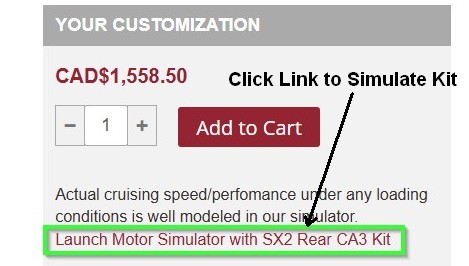
When you select all the options from the dropown, the cart summary will provide a link to launch our motor simulator with the selected components if you want to see a detailed performance expectation. These tools are technical but they do provide all the performance answers once you understand how to use them.
Throttle? PAS? Torque Sensor?
A more complicated question for newbies is whether you want just a simple throttle to control the motor from the handlebar, or also a PAS or torque sensor that powers the bike automatically as you pedal. See our summary of these pedal assist options.
Throttle-only setups are simplest so if you are new to all this and don't want to be overwhelmed with choices we'd always say to start off with just a throttle and see if that's all you need. PAS or torque sensors are optional for all our kit bundles, and can always be added as a later upgrade.
If you do want a pedal or torque sensor though, you will be selecting either a Main9 kit package, or a Cycle Analyst based package. The differences between these are summarized in the Kit Type info page.
Can you just recommend something for my bike?
Yes! About half of our inquiries start off with people describing their bike to us and asking what we recommend. We are very happy to do this. However, in addition to the bike make and model, we also need an indication of what performance you want out of the kit. This can be summarized by 3 details:
1) Speed: How fast do you want the system to be able to keep providing assistance?
2) Power: How much torque and power you are after. This doesn't need to be in watts or newton-meters. Are you climbing steep hills towing a 200 lb trailer? Or are you a fit commuter looking for a speed boost on mostly flat terrain?
3) Range: How far do you need to go on a single charge? On this front we recommend always having enough charge to do your return trip, rather than topping up at work.
So when you get in touch, please include that information to save us a round of questions. We'll usually have no problems recommending one or two systems from our catalog once we have an indication of those three points and a description of your bike.
What about mid-drive motors?
Contrary to what you may have been told repeatedly, hub motor drives are the best option for a majority of ebike users, especially for regular commuters who need a reliable, low-maintenance bike. We've worked with various mid-drive systems over the years and are quite familiar with them, but have decided to focus our business 100% on hub motors. You can read our reasons in why hub motors are awesome.
So tell us exactly what you need from the system and we can let you know if we have a hub motor solution that will do the job just as well or better than the mid-drive that you've been recommended.
Can you install a kit for me?
Yes, although Grin is primarily a technology and engineering company, we now install kits that we sell on customer bikes. Read about it and come book an appointment here. Our primary aim is still to produce and supply parts and information to people who are keen to do an installation themselves, and most of our business will continue to be tailored to that.
Can you recommend a shop near me to install it?
If you are not close enough for us to install it ourselves, we would love to say you can take a kit to any bike shop and they will gladly install and service it too, but that is not how things are yet. Most bike shops are set up for simply selling proprietary factory ebikes and rely on the ebike manufacturer to provide warranty support via simple component swapping. They're not typically interested in getting their hands involved in the electrical or custom side of things.
We are hoping to change this culture with conversion kits that have open standards and component interchangeability so that bike shops can embrace servicing and upgrading ebikes the same way that they do with conventional bicycles. We'll see if that gains traction. In the meantime, if you really can't do the install yourself, a few bike shops have staff with a personal interest in DIY ebike builds who will take on a kit installation. So it can be worth calling around your local bike shops.
Why not just offer two or three simple kits and skip all the technical stuff?
It is a fair question. For anyone who wants a simpler starting point, that is exactly what the Kit Builder and our recommendations above are for.
We also deliberately keep the full range of parts, because we enjoy filling niche applications that mainstream products ignore and working with people whose needs are a little outside the box. For a sense of what is possible, browse the hundreds of customer builds in our project gallery.
We also take an interest in educating people in how these things work, and that is reflected in the parts we design and offer which try to illuminate what is under the hood rather than hide it.